 By Caleb Morgan
Updated November 2026
A 5 gallon beer fermenter is the most common vessel for homebrewers making full five-gallon batches, and the right one depends on how you ferment, how you clean, and whether you want to see the beer working. This list compares six widely sold options by fit with those needs. The criteria are listing details, brand reputation, lid and airlock design, and patterns owners commonly report.
Best overall: Speidel Plastic Fermenter – View on Amazon
Best for a bucket with a spigot: FastTrack Fermentation Bucket – View on Amazon
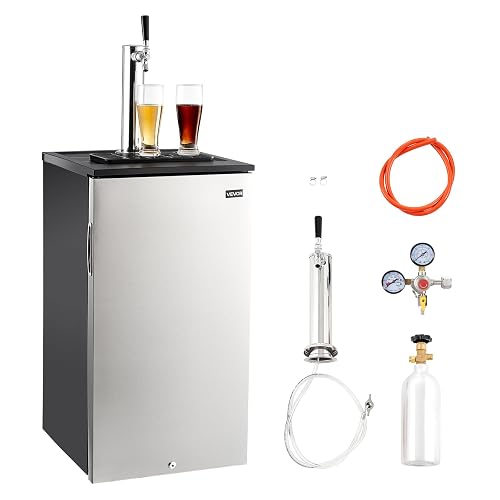
Best for pressure fermenting: VEVOR Pressure Fermenter – View on Amazon
Best for visual monitoring: Reusable 5 Gallon Glass Carboy – View on Amazon
Best glass carboy set: Suzile 5 Gallon Glass Carboy Set – View on Amazon
Best shatter-resistant carboy: PET Plastic 5 Gal Carboy – View on Amazon
Our Top Picks
| Product | Best for | Key feature |
|---|---|---|
| Speidel Plastic Fermenter – 20L (5.3 gal) | Overall use | Plastic bucket with lid |
| FastTrack Fermentation Bucket with Spigot | Easy transfers | Built-in spigot |
| VEVOR Pressure Fermenter 8 Gal | Pressure fermenting | Stainless conical, 15 PSI rating |
| Reusable 5 Gallon Glass Carboy | Watching fermentation | Clear glass body |
| Suzile 5 Gallon Glass Carboy Set | Complete starter kit | Stoppers and airlock included |
| PET Plastic 5 Gal Carboy | Durability | Shatter-resistant PET |
Speidel Plastic Fermenter

Speidel Plastic Fermenter – 20L (5.3 gal)
Best for: Overall use in a standard ale or lager setup.
This plastic fermenter suits brewers who want a simple, lightweight vessel with a lid they can seal and fit an airlock into. It is a practical general-purpose choice.
Pros
- Lightweight and easy to move
- Simple lid with airlock fitting
Cons
- Plastic can hold odors and scratch over time
FastTrack Fermentation Bucket with Spigot
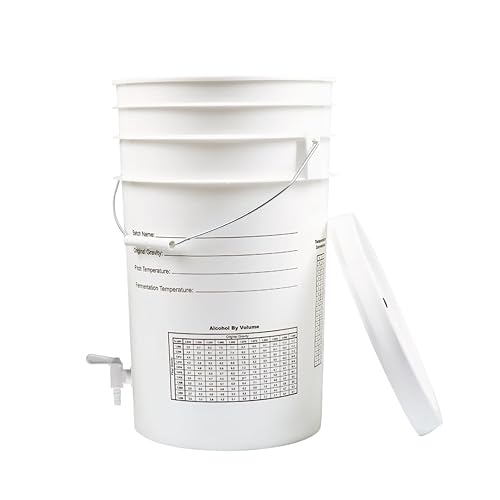
FastTrack Fermentation Bucket with Spigot | Home Brewing Wine Fermenter with Spigot | 100% Food Grade-BPA Free Fermenting Bucket for your Beer, Wine, Mead, Cider, or any other Fermented Beverage
Best for: Easy transfers and bottling without a siphon.
Brewers who bottle often and want to skip starting a siphon will appreciate the spigot. It fits well into a basic bucket-fermentation routine.
Pros
- Built-in spigot simplifies bottling
- Food-grade, BPA-free plastic
Cons
- Spigot needs careful cleaning to avoid buildup
VEVOR Pressure Fermenter 8 Gal

VEVORfor Wine and Beer Brewing, All-in-One Design Supports Secondary Fermentation and Convenient Home Batch Preparation Tasks Pressure Fermenter 15 PSI, 8 Gallon Stainless Steel Conical Bucket
Best for: Pressure fermenting and conical-style setups.
This stainless conical suits brewers who want to ferment under controlled pressure and collect trub from the cone. Its 8-gallon capacity leaves headroom for a 5-gallon batch.
Pros
- Stainless steel resists scratches and odors
- Conical bottom eases yeast removal
Cons
- Heavier and pricier to set up than plastic buckets
Reusable 5 Gallon Glass Carboy
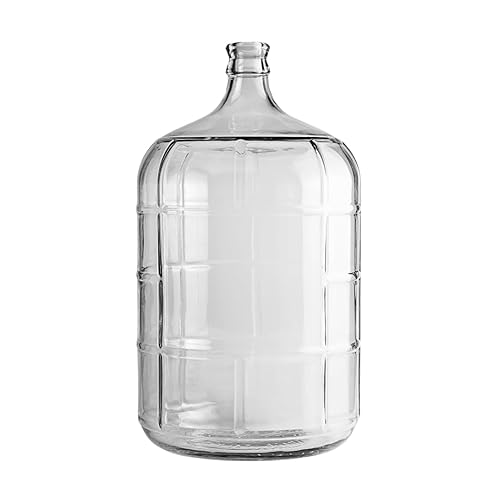
Reusable 5 Gallon Glass Carboy for brewing and storage | Glass Carboy 5 Gallon opening fits a #7 stopper – sold separately Italian Carboy 5 Gallon | Clear Fermenter for Wine, Beer and Kombucha
Best for: Watching fermentation and seeing the beer clear.
Brewers who like to see krausen, sediment and clarity will prefer glass. It works for beer, wine and kombucha alike.
Pros
- Clear body shows fermentation progress
- Non-porous, easy to sanitize
Cons
- Heavy when full and breakable if dropped
Suzile 5 Gallon Glass Carboy Set

Suzile 5 Gallon Glass Carboy Set, 5 Gallon Glass Water Jug with Drilled & Undrilled Rubber Stoppers, Bubble Airlock, Handle and Brush, Fermenter Carboy Jug for Beer Wine Making Equipment (Clear)
Best for: A complete starter kit for a first glass carboy.
New brewers who want stoppers, an airlock and a brush in one package will find this set convenient. It suits a first all-in-one purchase.
Pros
- Includes drilled and undrilled stoppers
- Comes with airlock and cleaning brush
Cons
- Glass is fragile and needs careful handling
PET Plastic 5 Gal Carboy
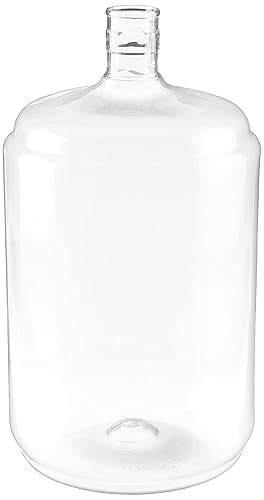
PET Plastic 5 Gal Carboy | Wine Carboy 5 gallon Shatter resistant & BPA Free for beer, wine, cider, kombucha & storage PET Plastic Fermenter | 5 Gallon Carboy for Beer, Wine and Cider | 1 Pack
Best for: Durability with the visibility of a carboy.
Brewers who want a clear vessel but worry about breakage will like PET plastic. It is often recommended for basement and garage brewing.
Pros
- Shatter-resistant and BPA-free
- Lighter than glass
Cons
- Can scratch more easily than glass
Buying Guide
Material: Plastic, Glass or Stainless
Plastic buckets are light and forgiving, while glass offers clear viewing and easy sanitizing. Stainless steel is durable but heavier and more costly to set up.
Closure and Airlock Fit
Check whether the lid or stopper accepts a standard airlock and whether the opening is large enough for your cleaning brush.
Headspace for a 5 Gallon Batch
A vessel rated for roughly 6 gallons leaves room for foam during active fermentation. Smaller carboys can overflow if you brew at full volume.
FAQ
Do I need a carboy or a bucket for a 5 gallon batch?
Either works for a standard five-gallon batch, but they suit different habits. Buckets are wider and easier to stir, clean, and fill, while carboys are narrower and give you a clear view of the beer and a smaller surface exposed to air.
What size fermenter should I buy for a 5 gallon batch?
A fermenter rated for about 5 gallons leaves little room for krausen, the foam that rises during active fermentation. Many brewers choose a vessel with extra capacity so the beer has room to foam up without blowing into the airlock.
Can I use a glass carboy for primary fermentation?
Glass carboys are commonly used for primary fermentation, though they are heavy and fragile when full. Make sure the stopper and airlock fit the opening securely, and handle the carboy carefully when moving it.
Do I need a spigot on my fermenter?
A spigot is useful if you plan to bottle directly from the fermenter or transfer without siphoning. If you siphon, a fermenter without a spigot will work just as well and is often simpler to clean.
Is a pressure fermenter worth it for a beginner?
A pressure fermenter adds control over carbonation and can help with fermentation issues, but it adds cost and complexity. Beginners can usually brew successfully with a basic bucket or carboy before moving up to pressure equipment.
How do I clean a 5 gallon fermenter after use?
Rinse out the fermenter soon after emptying it, then wash with a brewing-safe cleaner and rinse well. Sanitize everything that will touch the beer before the next batch, since cleanliness matters more than the material you choose.
Conclusion
For most homebrewers making five-gallon batches, a plastic bucket like the Speidel or FastTrack offers an easy, affordable starting point. Brewers who want to watch fermentation or prefer a clean, non-porous surface should consider one of the glass or PET carboys, while those interested in pressure fermenting will find the VEVOR the best fit.
Match your choice to your process: pick a bucket for ease of use, a carboy for visibility, and a pressure vessel if you plan to carbonate and control fermentation closely. Whichever you choose, budget for a properly sized stopper or lid, an airlock, and a good sanitizer so your five-gallon batches start strong.
Related reading
- Mr Beer 1 Gallon Fermenter: A Step-by-Step Guide for Beginners
- White Film on Beer in Fermenter: What It Is and How to Fix It
- When to Transfer to Secondary Fermenter Beer: A Homebrewer's Guide
- Syphon Beer from Fermenter: A Step-by-Step Guide for Homebrewers
About Caleb Morgan
Caleb Morgan is part of our editorial team and reviews and edits our home brewing guides, checking product details against manufacturer specifications and owner feedback.