 By Graham Fisher
Updated November 2026
Choosing a wine making equipment kit is mostly about matching the set to your batch size, your experience level and the gear you already own. This list compares seven kits that cover the basics of home winemaking: a fermentation vessel, an airlock, a way to move wine without splashing it, a hydrometer or testing tool, and sanitizer or cleaning supplies. Each pick is judged on what the listing says is included, the batch volume it supports, how well it suits a first-time winemaker, and the feedback owners commonly report about fit and completeness. No kit here was tested in a lab or brewed by the author, so treat the notes as a guide built from specifications and owner patterns rather than hands-on results.
Our top picks at a glance
- 1
 TOP CHOICEBest overallWine Making Kit & Mead Making Kit | Complete Home Brewing Kit for BegiView on Amazon
- 2
 TOP CHOICEBest for small batchesHome Brew Ohio Upgraded 1 Gallon Wine from Fruit KitView on Amazon
- 3
 TOP CHOICEBest for grape juice beginnersWine Making Kit Home Brewing Grape Juice Brew Starter SetView on Amazon
- 4
 Best budget pickNorth Mountain Supply Fermenting Jug Starter Kit, 1 GallonView on Amazon
- 5
 Best for mid-size batchesWine Making Equipment Kit Glass 3 GallonView on Amazon
- 6
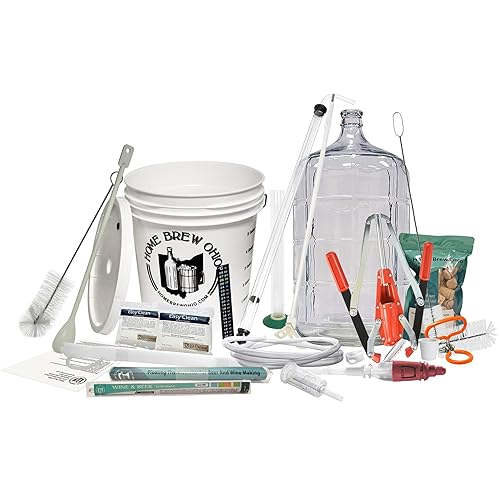 Best for full-size carboy batchesUltimate Wine Making Equipment Starter Kit with 6 Gallon Glass CarboyView on Amazon
- 7
 Best for a 3-gallon glass setupWinemakers Depot 3 Gallon Glass Wine Making Equipment KitView on Amazon
Our Top Picks
Quick Comparison
| Product | Best for | Key feature |
|---|---|---|
| Wine Making Kit & Mead Making Kit | Beginners who want one complete set | Glass carboy, hydrometer, siphon and airlock listed together |
| Home Brew Ohio 1 Gallon Wine from Fruit Kit | Small fruit wine batches | Mini auto-siphon included |
| Grape Juice Brew Starter Set | First grape juice wine | Four bottles plus yeast, nutrients and a step-by-step guide |
| North Mountain Supply Fermenting Jug Starter Kit | Trying winemaking on a tight budget | Jug with handle, airlock and yeast in a 1-gallon size |
| Wine Making Equipment Kit Glass 3 Gallon | Mid-size batches with a glass vessel | 3-gallon glass fermenter |
| Ultimate Wine Making Equipment Starter Kit | Standard 6-gallon batches | 6-gallon glass carboy |
| Winemakers Depot 3 Gallon Glass Kit | Simple 3-gallon glass setup | Glass fermenter kit in a compact size |
Wine Making Kit & Mead Making Kit | Complete Home Brewing Kit for Beginners & Experts
Wine Making Kit & Mead Making Kit | Complete Home Brewing Kit for Beginners & Experts – Includes Glass Carboy, Fermenter, Hydrometer, Siphon, Airlock & More | DIY Wine Brewing Equipment
Best for: Beginners who want one complete set for wine or mead
This kit suits someone who wants to start with everything in one order rather than piecing together parts. Its listing name points to a glass carboy, fermenter, hydrometer, siphon and airlock, which covers the core equipment for a first batch.
Key specs
- Glass carboy and fermenter
- Hydrometer for tracking sugar and alcohol
- Siphon and airlock
Pros
- Covers the full core set in one purchase
- Works for both wine and mead, which broadens what you can make
- Gives beginners a clear starting inventory to learn from
Cons
- Ingredients such as juice, yeast and sanitizer are not part of the listing name
- Glass vessels need careful handling when moving full batches
Bottom line: A strong first purchase for a beginner who wants a single complete order and plans to make both wine and mead.
Home Brew Ohio Upgraded 1 Gallon Wine from Fruit Kit
Home Brew Ohio Upgraded 1 Gallon Wine from Fruit Kit – Includes Mini Auto-Siphon
Best for: Small fruit wine batches
This is aimed at people who want to make one gallon at a time from fruit or fruit concentrate. A small batch keeps the investment low and lets you try a recipe before scaling up.
Key specs
- One-gallon batch size
- Mini auto-siphon included
Pros
- Small volume is easy to handle and store
- Auto-siphon simplifies racking
- Good for trying different fruit recipes
Cons
- One gallon yields only about five standard bottles
- Not suited to larger batches without additional gear
Bottom line: Best for someone who wants a quick, low-volume fruit wine project before committing to bigger equipment.
Wine Making Kit Home Brewing Grape Juice Brew Starter Set
Wine Making Kit Home Brewing – Complete Grape Juice Brew Starter Set for Beginners, 1 Gallon Glass Fermentation Jar with 4 Bottles, Yeast & Nutrients, Siphon, Airlock and Step-By-Step Guide
Best for: First grape juice wine
This set is built around a grape juice base and is framed as a guided starter. It fits someone who wants a clear, step-by-step route to a first bottle.
Key specs
- One-gallon glass fermentation jar
- Four bottles included
- Yeast and nutrients, siphon and airlock
Pros
- Includes yeast and nutrients, so fewer separate shopping trips
- Bottles are included for finishing the batch
- Written guide helps first-timers follow the process
Cons
- Single-gallon output limits volume
- Grape juice cost and quality are separate from the kit
Bottom line: A good pick for a first grape juice batch where guidance and included consumables matter most.
North Mountain Supply Fermenting Jug Starter Kit, 1 Gallon
Home Brewing, Starter Kit, Wine, Beer Brewing For Beginners, Jug With Handle, Airlock, Yeast North Mountain Supply Fermenting Jug Starter Kit, 1 Gallon
Best for: Trying winemaking on a tight budget
The jug-based design is simple and forgiving, which suits someone testing whether they enjoy fermenting before investing in larger gear. It is also useful for beer or other ferments if you want flexibility.
Key specs
- One-gallon fermenting jug
- Handle for easier carrying
- Airlock and yeast included
Pros
- Simple setup with few parts
- Handle makes moving the jug easier than a bare carboy
- Low-commitment way to learn fermentation basics
Cons
- One-gallon capacity is small for regular production
- Siphon and bottling supplies may need to be added
Bottom line: The best low-commitment starting point if you want to see how winemaking suits you before buying larger equipment.
Wine Making Equipment Kit Glass 3 Gallon
Wine Making Equipment Kit-Glass 3 gallon
Best for: Mid-size batches with a glass vessel
A 3-gallon glass setup gives you enough volume for a modest number of bottles while staying manageable. It suits someone who has outgrown one-gallon batches but is not ready for a full carboy.
Key specs
- Three-gallon glass fermenter
- Glass construction, which is non-porous and easy to clean
Pros
- Glass resists staining and is easy to sanitize
- Three gallons gives a practical middle batch size
- Easy to inspect fermentation through clear glass
Cons
- Glass is heavy and breakable when full
- Accessory list should be checked before ordering
Bottom line: Suits a home winemaker moving up from small batches who wants a clear glass vessel at a moderate size.
Ultimate Wine Making Equipment Starter Kit with 6 Gallon Glass Carboy
Ultimate Wine Making Equipment Starter Kit with 6 Gallon Glass Carboy
Best for: Standard 6-gallon batches
The 6-gallon carboy matches the most common full-size home batch, around 30 bottles. This suits someone committed to regular production who wants one vessel that handles a full run.
Key specs
- Six-gallon glass carboy
- Starter kit accessories as listed by the seller
Pros
- Six gallons matches a standard full-size batch
- Glass is inert and easy to sanitize
- Good for aging wine in the same vessel
Cons
- A full 6-gallon carboy is very heavy to lift and siphon
- Requires more space and a sturdy work surface
Bottom line: A good choice for an established winemaker who makes full batches and has the space and lifting plan to handle them.
Winemakers Depot 3 Gallon Glass Wine Making Equipment Kit
Winemakers Depot 3 Gallon Glass Wine Making Equipment Kit
Best for: Simple 3-gallon glass setup
This is a straightforward three-gallon glass kit for someone who wants the mid-size volume without extra features. It works well as a second fermenter alongside a larger vessel.
Key specs
- Three-gallon glass fermenter
- Core equipment as listed by the seller
Pros
- Simple, focused kit with a clear purpose
- Manageable weight compared with a 6-gallon carboy
- Glass is easy to clean between batches
Cons
- Listing details should be confirmed for included accessories
- Glass still requires careful handling
Bottom line: Best for a home winemaker who wants a dependable three-gallon glass setup and already has some basic gear.
Buying Guide
Batch size and vessel volume
Start with how much wine you want to make per run. A one-gallon jug yields about five standard 750 ml bottles, a three-gallon vessel yields about 15, and a six-gallon carboy yields about 30. Leave some headspace in the fermenter, because active fermentation produces foam. Filling a vessel to the brim is a common cause of blow-off.
Good picks for this: Home Brew Ohio 1 Gallon Wine from Fruit Kit, Ultimate Wine Making Equipment Starter Kit
Vessel material: glass versus plastic
Glass is non-porous, resists staining and is easy to sanitize, which is why many winemakers prefer it for long fermentation and aging. Plastic is lighter and less likely to break, but scratches can harbor bacteria over time. Glass demands careful lifting and a stable surface.
Good picks for this: Wine Making Equipment Kit Glass 3 Gallon, Winemakers Depot 3 Gallon Glass Kit
Included accessories
Check whether the kit includes an airlock, siphon, hydrometer, tubing and sanitizer. A hydrometer lets you track sugar and estimate alcohol, while an airlock lets gas escape without letting air in. If accessories are missing, you will need to buy them separately before your first batch.
Good picks for this: Wine Making Kit & Mead Making Kit, Grape Juice Brew Starter Set
Ingredients and consumables
Most kits do not include fruit, juice or grapes. Some do include yeast and nutrients, but you should confirm this. Yeast strain and nutrient choice affect fermentation speed and flavor, so plan these alongside the equipment.
Good picks for this: Wine Making Kit Home Brewing Grape Juice Brew Starter Set, North Mountain Supply Fermenting Jug Starter Kit
Ease of handling and weight
A full six-gallon carboy can weigh well over 50 pounds, so consider your lifting ability and where you will siphon. Handles and smaller volumes make moving full vessels safer. Work on a stable, level surface and keep glass away from hard impacts.
Good picks for this: North Mountain Supply Fermenting Jug Starter Kit, Winemakers Depot 3 Gallon Glass Kit
Durability and cleaning
Glass holds up to repeated sanitizing without degrading, while plastic may scratch and retain odors over time. Look for airlocks and stoppers that fit snugly and can be replaced. Clean and sanitize all gear before and after each batch.
Good picks for this: Wine Making Equipment Kit Glass 3 Gallon, Ultimate Wine Making Equipment Starter Kit
Your experience level
Beginners benefit from a guided kit with clear instructions and included consumables. Experienced winemakers may prefer a larger vessel and fewer extras to avoid paying for gear they already own. Match the kit to what you will actually use.
Good picks for this: Wine Making Kit & Mead Making Kit, Grape Juice Brew Starter Set
FAQ
What is included in a wine making equipment kit?
Most kits include a fermenter or carboy, an airlock and stopper, a siphon or auto-siphon, and sometimes a hydrometer. Some add bottles, yeast or nutrients. Read the listing carefully, because included items vary by kit.
What batch size should a beginner start with?
A one-gallon batch is a low-risk way to learn the process, since it uses less juice and produces fewer bottles to manage. Moving to three or six gallons makes sense once you are comfortable with sanitizing, fermenting and racking.
Do I need a hydrometer?
A hydrometer is not strictly required, but it is the most reliable way to track sugar levels and estimate alcohol content. Many winemakers consider it essential for repeatable results.
Glass or plastic fermenter: which is better?
Glass is easier to sanitize and resists staining, which many winemakers prefer for long projects. Plastic is lighter and less fragile. Either can work if it is cleaned and sanitized properly.
Are ingredients included in these kits?
Usually not. Some kits include yeast and nutrients, but fruit, grape juice or concentrate is generally purchased separately. Check the listing before you order.
How do I keep my equipment clean?
Wash gear with unscented soap, rinse thoroughly, then sanitize with a no-rinse or food-safe sanitizer before each use. Replace cracked stoppers and scratched plastic parts. Manufacturers generally advise following their specific cleaning instructions for each item.
Is home winemaking safe?
Home winemaking is generally low risk when hygiene is good and fermentation is monitored. Keep fermenters out of reach of children, avoid overfilling, and never seal a fermenting vessel airtight. If you have questions about safe alcohol production or local rules, consult a professional or your local regulatory office.
Conclusion
For most beginners, a complete starter kit with clear instructions is the easiest route into winemaking, so the Wine Making Kit & Mead Making Kit and the Grape Juice Brew Starter Set are good first choices. Small-batch and budget-minded buyers may prefer the one-gallon options, while home winemakers ready for full runs should consider the 3-gallon or 6-gallon glass setups. Match the batch size to how often you plan to brew, and confirm what each listing includes before ordering.
Sources
- Food safety guidance on sanitation and handling of fermented foods and beverages (fda.gov)
- Federal rules and guidance on home production of wine and alcohol (ttb.gov)
- University-backed extension resources on fermentation and home food preservation (extension.org)
Related reading
- Homebrew Wine Making Kit: A Step-by-Step Guide for Beginners
- 6 Best Wine Making Kit 1 Gallons for Beginners (2026)
- Primary Fermenter for Wine Making: A Step-by-Step Guide for Beginners
- 7 Best Homebrew Beer Making Kit Options for Beginners in 2026
About Graham Fisher
Graham Fisher is part of our editorial team and reviews and edits our home brewing guides, checking product details against manufacturer specifications and owner feedback.