 By Caleb Morgan
Updated November 2026
Hooking up a kegerator comes down to four jobs: placing the unit, connecting the CO2 regulator to a keg, attaching the beer line and faucet, and setting the pressure so your beer pours clean. Once those pieces are in place, you can serve cold beer from your own tap in under an hour. This guide covers how to hook up a kegerator the way most home bars do it, with a standard CO2 setup and a corny or similar keg.
Before You Start: Place and Level the Unit
Put the kegerator on a flat, solid surface with at least 3 to 4 inches of clearance behind and above it so the compressor can breathe. Heat trapped at the back makes the unit run longer and hold temperature poorly. Level the cabinet so the door seals evenly and any condensate drains where it should.
Shopping for one? See our guide: Where to Fill Up CO2 Tank for Kegerator: 5 Best Options (2026).
Plug it into a dedicated outlet if you can. Let the unit run for several hours before you add beer, so the interior reaches serving temperature, usually around 36 to 38°F.
Connect the CO2 Regulator to the Tank
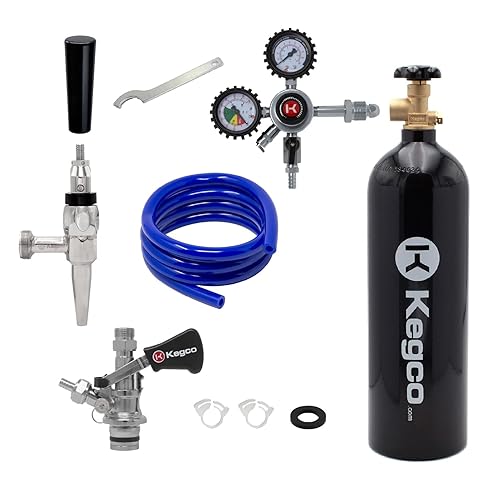
Secure the CO2 tank upright with a strap or chain, either inside the cabinet if it is designed for that or outside it. Attach the regulator to the tank valve, hand-tightening first and then snugging with a wrench. Check for leaks by spraying a little soapy water on the connection; bubbles mean you need to tighten or replace a washer.
Keep the regulator’s pressure-adjustment knob fully counterclockwise until you are ready to set serving pressure. This protects your gauges and lines during setup.
Attach the Gas Line and Beer Line to the Keg
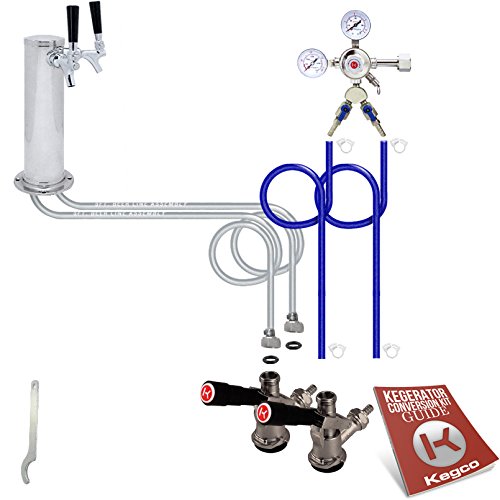
- Connect the gas line from the regulator’s outlet to the gas-in post on the keg coupler (the disconnect that fits your keg type).
- Connect the beer line to the liquid-out post on the coupler. Push it on firmly and secure it with a clamp if your coupler uses one.
- Route the beer line through the cabinet’s tap tower or inlet hole, keeping the run as short and as straight as possible.
- Install the faucet on the tower and tighten it by hand. Do not overtighten plastic fittings.
Checking the Keg Connection
Seat the coupler on the keg and pull the handle to lock it. Listen for a hiss before you open the regulator. If the hiss continues after you have locked the coupler, the seal is not right and you should reseat it.
Set the Serving Pressure and Balance the System
Open the CO2 tank valve fully, then turn the regulator knob slowly clockwise until the outlet gauge reads your target serving pressure. For ales kept around 38°F, many brewers start near 10 to 12 PSI. Lagers and very cold storage often need a little more. Check your beer style and temperature to pick a starting point.
Balance means matching line length and resistance to pressure. A line that is too short with high pressure pours foamy beer, while a line that is too long with low pressure pours slowly. If you pour too fast and get foam, lower the pressure slightly. If the pour is sluggish, add a little pressure or lengthen the line. Let the beer settle for a day or two after each adjustment before you judge it.
Common Mistakes
- Running the kegerator without letting the interior cool first, which leads to foamy early pours.
- Skipping the leak check on the regulator and tank connection.
- Using beer line that is too short for the pressure you are running.
- Cranking the regulator up to speed up the pour instead of balancing the system.
- Storing the CO2 tank lying down or without securing it, which is a safety hazard.
Recommended Gear
- Dual-gauge CO2 regulator: Shows both tank pressure and serving pressure so you can monitor your setup without guessing. View on Amazon
- Beer line with barb fittings: Gives you a secure, leak-resistant connection between the coupler and faucet. View on Amazon
- Soapy-water leak spray bottle: A cheap way to check every gas connection before you pressurize the keg. View on Amazon
FAQ
How long should I wait before pouring the first beer?
Give the kegerator at least a few hours to reach serving temperature, and let a freshly tapped keg rest for a few hours before pouring. Beer that has been jostled or recently carbonated often pours foamy at first.
What pressure should I use for a kegerator?
Many home brewers begin around 10 to 12 PSI for ales at cold cellar temperatures, then adjust based on how the beer pours. Your beer style and line length both affect the right number.
Can I hook up a kegerator without a regulator?
You should not. A regulator is what lets you set and hold a steady serving pressure, and running a tank straight into a keg without one can overpressurize the keg and create a safety risk.
Conclusion
To hook up a kegerator, place the unit, connect the regulator and gas line, attach the beer line and faucet, then set and balance the pressure. Take your time with leak checks and line length, and most first-pour problems disappear. Once the system is dialed in, you will have a dependable tap at home.
Related reading
- Wine Fridge Kegerator Combo: How to Build One for Your Home Bar (2026)
- Tower Cooler for Kegerator: How to Choose and Install One (Step-by-Step)
- Kegerator and Refrigerator Combo: How to Build One That Works
Ready to choose one?
About Caleb Morgan
Caleb Morgan is part of our editorial team and reviews and edits our home brewing guides, checking product details against manufacturer specifications and owner feedback.