 By Caleb Morgan
Updated November 2026
Choosing a 5 gallon stainless steel conical fermenter comes down to a few practical questions: how well it handles temperature, how easily you can pull yeast and trub from the cone, whether the lid and valves seal properly, and how much cleaning it demands after each batch. Below, we compared six listings on those criteria, using manufacturer specifications, brand reputation and common owner feedback patterns. None of these were tested by us. For a deeper look, 5 Best Buy Stainless Steel Fermenter Options for Homebrewers (2026) covers this in detail.
Best overall: Conical Fermenter for Homebrew/Wine/Brewing, Pro Grade Stainless Steel – View on Amazon
Best for pressure fermenting: VEVOR Pressure Fermenter 15 PSI – View on Amazon
Best for wide-mouth access: Stainless Steel Conical Fermenter 17 Gallon – View on Amazon
Best for oversized batches: Home Brewing Brew Bucket Fermenter 30.4 Gallon – View on Amazon
Best budget plastic alternative: Speidel Plastic Fermenter-60L – View on Amazon
Best starter kit: Fermentation Bucket with Twin Bubble Airlock Grommets Lid – View on Amazon
Our Top Picks
| Product | Best for | Key feature |
|---|---|---|
| Conical Fermenter for Homebrew/Wine/Brewing, Pro Grade Stainless Steel | General all-round use | Pro grade stainless construction |
| VEVOR Pressure Fermenter 15 PSI | Pressure fermentation | 15 PSI rated, cooling tube |
| Stainless Steel Conical Fermenter 17 Gallon | Easy access and cleaning | Wide mouth with lid |
| Home Brewing Brew Bucket Fermenter 30.4 Gallon | Oversized batches | Large conical base |
| Speidel Plastic Fermenter-60L | Low-cost plastic option | Lightweight, 60L capacity |
| Fermentation Bucket with Twin Bubble Airlock Grommets Lid | First-time brewers | Complete lid and airlock kit |
Conical Fermenter for Homebrew/Wine/Brewing, Pro Grade Stainless Steel – 13 Gallons

Conical Fermenter for Homebrew/Wine/Brewing, Pro Grade Stainless Steel – 13 Gallons
Best for: General all-round use
This suits homebrewers who want a dependable stainless cone for regular ale and lager batches, and who plan to keep the fermenter for years. For another angle, check out 6 Best 2 Gallon Fermenter Bucket and Lid Options for Homebrewers (2026).
Pros
- Stainless construction resists scratches better than plastic
- Conical base helps separate trub and yeast
Cons
- Listed at 13 gallons, so it is larger than a 5 gallon batch needs
VEVOR Pressure Fermenter 15 PSI, 16 Gal/60L All-in-One Stainless Steel Conical Secondary Fermentation Bucket

VEVOR Pressure Fermenter 15 PSI, 16 Gal/60L All-in-One Stainless Steel Conical Secondary Fermentation Bucket, with Cooling Tube, Yeast Slurry Collection Bottle, for Wine, Beer Brewing Equipment
Best for: Pressure fermentation
Brewers interested in closed, pressurized fermentation or carbonating in the vessel will find the rated pressure and cooling tube most relevant.
Pros
- Pressure rating of 15 PSI is listed by the manufacturer
- Includes a cooling tube and yeast collection bottle
Cons
- More fittings mean more parts to sanitize
Stainless Steel Conical Fermenter 17 Gallon | Homebrew Beer & Wine Making Tank

Stainless Steel Conical Fermenter 17 Gallon | Homebrew Beer & Wine Making Tank | Wide Mouth with Lid & Airlock Fermentation tank| 304 SS, Durable & Easy Clean (Home Brewing Equipment)
Best for: Easy access and cleaning
Brewers who clean by hand and want to reach the whole interior will appreciate the wide opening and 304 stainless body the listing describes. If you want more background, see 6 Best Minibrew 8 Gallon Conical Fermenter Options for Homebrewers (2026).
Pros
- Wide mouth makes scrubbing and dry hopping easier
- Listed as 304 stainless steel
Cons
- Heavy when full, so plan your transfer setup
Home Brewing Brew Bucket Fermenter With Conical Base 30.4 Gallon Stainless Steel
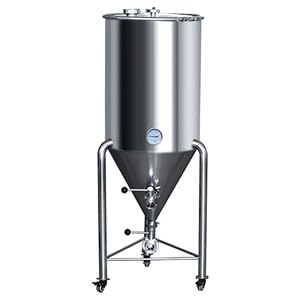
Home Brewing Brew Bucket Fermenter With conical base Brewing Equipment 30.4 Gallon Stainless Steel Brew Fermenter With conical base
Best for: Oversized batches
This is aimed at brewers who scale up or want headroom for kraeusen, though it is more capacity than most 5 gallon brews require. You may also like 5 Best Guten 30L Conical Fermenter Stainless Steel Options for 2026.
Pros
- Large capacity leaves room for vigorous fermentation
- Conical base supports yeast harvesting
Cons
- Bulky footprint for small home setups
Speidel Plastic Fermenter-60L (15.9 gal), 60L, White, (21007)

Speidel Plastic Fermenter-60L (15.9 gal), 60L, White, (21007)
Best for: Low-cost plastic option
Brewers on a tight budget who are comfortable with plastic and want a lightweight vessel for simple fermentations will find it practical.
Pros
- Lightweight and easy to move
- Simple design with fewer parts
Cons
- Plastic scratches more easily than stainless and can hold residue
Fermentation Bucket with Twin Bubble Airlock Grommets Lid, 6.5 Gallon

with Twin Bubble Airlock Grommets Lid Brewing, Wine Fermenter Fermentation Kit, Home Beer Wine Mead Other Fermented Beverage 4 Pcs White 6.5 Gallon Fermentation Bucket for Fermented Beverage
Best for: First-time brewers
Newer homebrewers who want everything needed to start fermenting in one package will find the included lid and airlock grommets convenient.
Pros
- Kit includes lid, airlock and grommets
- Straightforward setup for beginners
Cons
- Not a true conical design, so yeast separation is limited
Buying Guide
Capacity and Batch Size
Check the listed volume against what you actually brew. A 5 gallon batch needs headspace, so a vessel labeled 13 gallons or larger gives you room for active fermentation foam and extra flexibility for future batches. Smaller vessels can work for a single 5 gallon batch but leave less room for vigorous fermentation.
Cone Angle and Yeast Harvesting
A steeper cone makes it easier for trub and spent yeast to collect at the bottom, where a dump valve can release it. Look for a clearly defined conical base with a sanitary sample or drain port if you plan to harvest yeast or dry hop cleanly.
Lid, Gasket and Seal Quality
A tight seal matters for both airlock use and pressure work. Check whether the lid uses a silicone or rubber gasket, whether it includes grommets for airlocks or a blowoff tube, and how the clamp or band closes. Solid clamps help maintain a reliable seal over repeated batches.
Temperature Control Compatibility
Stainless steel conicals are often used with glycol jackets, cooling coils or immersion chillers. If you control fermentation temperature, look for models with a cooling tube or a jacket option, or confirm the vessel can accept a fermentation chamber setup.
Cleaning and Material Grade
Food-grade 304 stainless steel resists corrosion and is easier to sanitize than plastic, which can scratch and harbor bacteria over time. Smooth interior welds and wide openings make scrubbing and sanitizer application simpler after every batch.
FAQ
Is a stainless steel conical fermenter better than a plastic bucket?
Stainless steel is more durable, resists scratches that can hide bacteria, and handles cleaning and sanitizing well. Conical shapes also make yeast and trub easier to remove from the bottom. Plastic buckets are lighter and less expensive but offer fewer harvesting advantages.
Can I use a 5 gallon stainless steel conical fermenter for wine?
Yes, many conical fermenters work for both beer and wine, provided the lid seals well and the vessel can be sanitized thoroughly. Wine often benefits from stable temperatures and a tight seal to limit oxygen exposure during fermentation. Check that the model is marketed for wine or general fermentation before buying.
Do I need a pressure-rated fermenter?
Pressure-rated models are useful if you want to carbonate in the fermenter, ferment under controlled pressure, or transfer beer without exposing it to oxygen. If you only ferment at normal atmospheric pressure, a standard conical with an airlock is usually enough.
How do I clean a stainless steel conical fermenter?
Rinse out residue right after use, then wash with a non-abrasive cleaner and warm water. Sanitize thoroughly before each batch using a no-rinse sanitizer. Avoid harsh chlorine solutions on stainless steel for long periods, as they can cause pitting.
Is a larger capacity model always the better choice?
Not necessarily. A larger vessel takes more space, more cleaning effort and more time to cool or heat. If you mainly brew 5 gallon batches, a model sized close to that volume with adequate headspace may be more practical.
Conclusion
Homebrewers who want a versatile, general-purpose stainless conical for beer and wine should start with the best overall option, which offers a good balance of size, build and everyday usability. Those who plan to carbonate or ferment under pressure will find the pressure fermenter the better fit.
Brewers on a tight budget or who want a plastic option for simple, occasional use can consider the lower-cost plastic bucket, while those with larger batches or future expansion plans will get the most from the bigger stainless models.
Related reading
- 15 Gallon Stainless Steel Conical Fermenter: A Setup and Brew Day Guide
- Top 6 Conical Beer Fermenter Stainless Steel Options for Homebrewers
- Stainless Steel Conical Fermenter UK: Buying and Setup Guide for Homebrewers
About Caleb Morgan
Caleb Morgan is part of our editorial team and reviews and edits our home brewing guides, checking product details against manufacturer specifications and owner feedback.