 By Graham Fisher
Updated November 2026
Choosing the right barley for brewing beer determines your wort sugar, color, and body more than almost any other ingredient. This list compares four barley products a home brewer might buy, covering base malt, roasted grain, and a whole hulled option. Selection criteria include malt type, suitability for home brewing, bag size, and how clearly the listing describes its intended use. We did not brew with these products ourselves; the picks are based on listing details and common owner feedback patterns.
Our top picks at a glance
- 1
 TOP CHOICEBest overallBox Brew Kits 2-Row Malted Barley 5 LBS CRUSHED Home Brewing Beer MakiView on Amazon
- 2
 Best for dark beersRoasted Barley 5 lb 350°L Grain for Home Brewing Beer, Stouts & PortersView on Amazon
- 3
 Best for small test batchesQuality Base Malt, Excellent Fermentability and Clean Flavor 2 Row Malt 1 lbView on Amazon
- 4
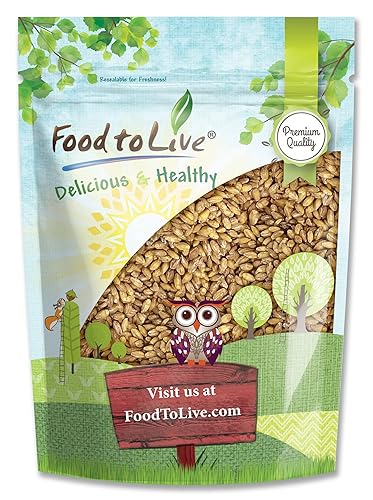 Best for non-malt cooking and brewing experimentsFood to Live Hulled Barley Grain, 6 Pounds – 100% Whole Grain, Vegan,View on Amazon
Our Top Picks
| Product | Best for | Key feature |
|---|---|---|
| Box Brew Kits 2-Row Malted Barley | Full batches of pale ale | Crushed, vacuum sealed |
| Roasted Barley 350°L | Stouts and porters | Deep roast color |
| Quality Base Malt 2 Row | Small test batches | 1 lb portion size |
| Food to Live Hulled Barley | Experimental brewing | Whole grain, 6 lb bag |
Box Brew Kits 2-Row Malted Barley 5 LBS CRUSHED Home Brewing Beer Making Recipe Ingredients Vacuum Sealed
Box Brew Kits 2-Row Malted Barley 5 LBS CRUSHED Home Brewing Beer Making Recipe Ingredients Vacuum Sealed
Best for: Full batches of pale ale and lager where base malt is the main fermentable.
This suits brewers who want a ready-to-mash base malt in a five-pound quantity that covers a typical five-gallon batch.
Pros
- Listing states the malt is already crushed, saving a milling step.
- Vacuum sealing is noted, which helps preserve freshness in storage.
Cons
- Pre-crushed grain loses some freshness faster than whole grain once opened.
Roasted Barley 5 lb 350°L Grain for Home Brewing Beer, Stouts & Porters
Roasted Barley 5 lb 350°L Grain for Home Brewing Beer, Stouts & Porters
Best for: Dark beers such as stouts and porters that need roasted color and flavor.
This is aimed at brewers adding a small percentage of roasted grain to a recipe for color and coffee-like character.
Pros
- The 350°L rating is stated clearly, which helps with recipe planning.
- Five-pound bag gives enough for several dark batches.
Cons
- Too much roasted grain can make a beer harsh, so small additions are needed.
Quality Base Malt, Excellent Fermentability and Clean Flavor 2 Row Malt 1 lb
Quality Base Malt, Excellent Fermentability and Clean Flavor 2 Row Malt 1 lb Barley for Home Brewing Beer, Distilling Moonshine, Whiskey
Best for: Small test batches and single-variable recipe experiments.
This fits brewers who want to sample a base malt without committing to a large bag, or who brew very small volumes.
Pros
- One-pound size is easy to store and use up before it goes stale.
- Listing emphasizes fermentability and clean flavor.
Cons
- Per-pound quantity is too small for a full five-gallon batch.
Food to Live Hulled Barley Grain, 6 Pounds – 100% Whole Grain, Vegan, Great for Home Baking, Brewing, Grinding
Food to Live Hulled Barley Grain, 6 Pounds – 100% Whole Grain, Vegan, Great for Home Baking, Brewing, Grinding. Rich in Selenium, Fiber. Perfect for Chili, Hot Cereal, Soup. Bulk Seeds. Made in USA
Best for: Experimental brewing, cooking, and baking where whole hulled grain is wanted.
This suits cooks and brewers who want a whole-grain product for mixed uses rather than a malted product for standard mashing.
Pros
- Listed as 100% whole grain and vegan, useful for varied kitchen use.
- Six-pound bag is a generous quantity for experiments.
Cons
- Unmalted hulled grain needs its own mashing approach and is not a direct swap for malt.
Buying Guide
Malt Type
Base malts such as 2-row provide most of the fermentable sugar in a recipe. Specialty and roasted malts add color and flavor in smaller amounts.
Good picks for this: Box Brew Kits 2-Row Malted Barley, Roasted Barley 350°L
Batch Size
Match the bag size to how much beer you plan to brew. A one-pound portion suits a sample batch, while five pounds covers a full five-gallon batch of pale ale.
Good picks for this: Quality Base Malt 2 Row, Box Brew Kits 2-Row Malted Barley
Milled or Whole Grain
Pre-crushed malt saves time but stales faster. Whole grain keeps longer but needs milling before use, and unmalted grain needs different handling.
Good picks for this: Box Brew Kits 2-Row Malted Barley, Food to Live Hulled Barley Grain
Listing Clarity
Look for a stated lovibond or °L rating, malt type, and storage instructions. Clear specifications make recipe planning much easier.
Good picks for this: Roasted Barley 350°L, Quality Base Malt 2 Row
FAQ
Can I use hulled barley instead of malted barley for beer?
Not directly. Hulled barley is unmalted, so its starches must be converted during mashing, and it usually needs a different process than standard malt.
How should I store barley for brewing beer?
Keep grain sealed, cool, and dry, away from light and humidity. Crushed malt should be used sooner than whole grain.
How much barley do I need for a five-gallon batch?
Most pale ale recipes use roughly 9 to 11 pounds of base malt, so you will often need several bags. Check your specific recipe, as amounts vary by style and strength.
Related reading
- Yeast for Beer Brewing: A Step-by-Step Guide for Beginners
- What Equipment Do I Need for Home Brewing Beer? A Starter Guide
- Top 7 Sour Beer Brewing Kits Worth Considering in 2026
- Top 6 Online Beer Brewing Classes for Home Brewers Learning at Their Own Pace
About Graham Fisher
Graham Fisher is part of our editorial team and reviews and edits our home brewing guides, checking product details against manufacturer specifications and owner feedback.


