 By Graham Fisher
Updated November 2026
If you are looking up the equipment needed for brewing beer at home, you probably want a short list of kits that cover the basics without guesswork. This guide compares six starter setups, covering the fermentation vessel, siphoning and bottling tools, and the recipe and ingredient packages that come with some kits. Selection criteria were specifications, brand reputation and patterns in owner feedback. We did not test these products ourselves, so treat the notes below as a research summary rather than hands-on results.
Our top picks at a glance
- 1
 TOP CHOICEBest overallNorthern Brewer – Brew. Share. Enjoy. HomeBrewing Starter Set, EquipmeView on Amazon
- 2
 TOP CHOICEBest for siphoning and transfersFermtech Mini 14" Long Deluxe Siphoning Kit – Complete Home Brewing EqView on Amazon
- 3
 TOP CHOICEBest for a complete beginner kitMaestro Homebrew Beer Equipment Kit with Auto SiphonView on Amazon
- 4
 Best for a glass fermenter setupGold Complete Beer Equipment Kit (K7) with 5 gal Glass CarboyView on Amazon
- 5
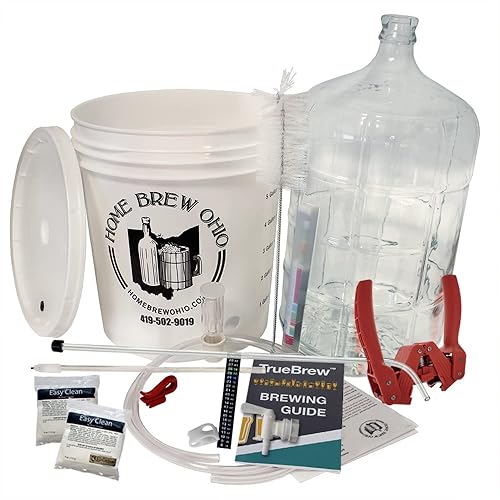
 Best for a 5-gallon essentials bundleHome Brew Ohio Essential 5 Gallon Beer Brewing Equipment KitView on Amazon
- 6
 Best budget pick for transfers and wine or kombucha crossoverFermtech Regular Deluxe Siphon Homebrew Kit, Regular Auto-Siphon BrewiView on Amazon
Our Top Picks
Quick Comparison
| Product | Best for | Key feature |
|---|---|---|
| Northern Brewer HomeBrewing Starter Set | First-time all-in-one brewing | Equipment plus recipe for 5-gallon batches |
| Fermtech Mini 14″ Long Deluxe Siphoning Kit | Siphoning and bottling | Auto siphon pump with food-grade hose |
| Maestro Homebrew Beer Equipment Kit with Auto Siphon | Basic starter setup | Auto siphon included in the kit |
| Gold Complete Beer Equipment Kit (K7) | Glass fermenter users | 5-gallon glass carboy |
| Home Brew Ohio Essential 5 Gallon Beer Brewing Equipment Kit | Straightforward 5-gallon batches | Core fermentation and transfer gear |
| Fermtech Regular Deluxe Siphon Homebrew Kit | Budget transfers and bottling | Wine bottling wand with clamp and brush |
Northern Brewer – Brew. Share. Enjoy. HomeBrewing Starter Set, Equipment and Recipe for 5 Gallon Batches (Hank’s Hefeweizen)
Northern Brewer – Brew. Share. Enjoy. HomeBrewing Starter Set, Equipment and Recipe for 5 Gallon Batches (Hank's Hefeweizen)
Best for: First-time all-in-one brewing
This set suits someone who wants a single purchase that covers the gear and a first recipe. It is aimed at brewers who prefer to start with a defined beer rather than sourcing ingredients separately.
Key specs
- Designed for 5-gallon (about 19-liter) batches
- Includes equipment and a recipe for Hank’s Hefeweizen, as named in the listing
Pros
- Gives a clear first project with a known recipe
- Reduces the number of separate orders needed to start
- Good fit for brewers who want guided steps
Cons
- Recipe choice is fixed, so you may want to upgrade the ingredients later
- Owners often report that some accessories are basic and may need replacing as skills grow
Bottom line: A strong pick for a beginner who wants one box and one recipe to get brewing right away.
Fermtech Mini 14″ Long Deluxe Siphoning Kit – Complete Home Brewing Equipment for Beer, Wine, Mead, and Craft Brew Making
Fermtech Mini 14" Long Deluxe Siphoning Kit – Complete Home Brewing Equipment for Beer, Wine, Mead, and Craft Brew Making; Includes Auto Siphon Pump, Food-Grade Transfer Hose, and Bottling Wand
Best for: Siphoning and bottling
This kit fits brewers who already have a fermenter and need reliable transfer tools. It is useful for moving wort and beer without splashing and for filling bottles.
Key specs
- Includes an auto siphon pump, food-grade transfer hose and bottling wand, as stated in the listing
- Compact 14-inch format, per the product name
Pros
- Automatic start reduces the risk of mouth-siphoning
- Useful across beer, wine and mead
- Small footprint for limited storage
Cons
- Does not include a fermenter or brew kettle
- Owners often report that hoses need careful cleaning and sanitizing
Bottom line: Best for brewers who need a transfer and bottling upgrade more than a full starter kit.
Maestro Homebrew Beer Equipment Kit with Auto Siphon
Maestro Homebrew Beer Equipment Kit with Auto Siphon
Best for: Basic starter setup
This kit suits someone building a first home brewing station from scratch. It bundles the common basics so you can start a batch without shopping for each part.
Key specs
- Includes an auto siphon, per the listing name
- Sold as a complete beer equipment kit
Pros
- Covers the core items in one order
- Auto siphon simplifies transfers
- Familiar setup that many beginner guides reference
Cons
- Components can vary by listing version, so check the contents before buying
- Owners sometimes mention that fittings need extra sealing tape
Bottom line: A practical choice for a beginner who wants a traditional all-in-one kit.
Gold Complete Beer Equipment Kit (K7) with 5 gal Glass Carboy
Gold Complete Beer Equipment Kit (K7) with 5 gal Glass Carboy
Best for: Glass fermenter setup
This kit is for brewers who prefer a glass carboy for primary or secondary fermentation and want the matching accessories in one package.
Key specs
- Includes a 5-gallon glass carboy, per the listing name
- Complete beer equipment kit format
Pros
- Glass is non-porous and easy to sanitize
- Lets you watch fermentation activity directly
- Sized for standard 5-gallon batches
Cons
- Glass is heavy and breakable, so handling needs care
- Owners often recommend a carboy handle or carrier for lifting full batches
Bottom line: Good for brewers who want glass fermentation and are comfortable handling a heavy carboy.
Home Brew Ohio Essential 5 Gallon Beer Brewing Equipment Kit
Home Brew Ohio Essential 5 Gallon Beer Brewing Equipment Kit
Best for: Straightforward 5-gallon batches
This kit is aimed at brewers who want the essentials for a standard 5-gallon batch without extras. It suits a first or second batch where the goal is learning the process.
Key specs
- Designed for 5-gallon batches, per the listing name
- Essentials-focused bundle
Pros
- Focused contents reduce clutter
- Matches the most common batch size
- Easy to expand with upgrades later
Cons
- Fewer extras than larger kits, so you may buy sanitizer and cleaners separately
- Specific component details should be confirmed on the listing before ordering
Bottom line: Suits a brewer who wants a lean, 5-gallon-focused kit with room to grow.
Fermtech Regular Deluxe Siphon Homebrew Kit, Regular Auto-Siphon Brewing Equipment, 24″ Pro Wine Bottling Wand Filler, Clamp and Tubing and 30″ Brush
Fermtech Regular Deluxe Siphon Homebrew Kit, Regular Auto-Siphon Brewing Equipment, 24" Pro Wine Bottling Wand Filler, Clamp and Tubing and 30" Brush. Wine, Beer, and Kombucha Making Supplies
Best for: Budget transfers and bottling
This kit suits brewers who want good transfer and bottling tools on a tighter budget, and who also make wine or kombucha and want shared gear.
Key specs
- Includes a 24-inch bottling wand, clamp, tubing and a 30-inch brush, per the listing name
- Regular auto-siphon format
Pros
- Brush helps clean narrow tubing and bottles
- Works across beer, wine and kombucha
- Good companion for an existing fermenter
Cons
- Does not include fermentation vessels or a kettle
- Owners sometimes mention the clamp needs a firm fit to avoid leaks
Bottom line: A sensible add-on for brewers who already own a fermenter and want better transfers.
Buying Guide
Fermentation vessel
The fermenter holds wort while yeast converts sugar to alcohol. Five-gallon buckets and glass carboys are the two most common options. Plastic is lighter and forgiving to handle, while glass is non-porous and easy to inspect. Choose a size that leaves headspace for krausen, the foam that forms during active fermentation.
Good picks for this: Gold Complete Beer Equipment Kit (K7), Home Brew Ohio Essential 5 Gallon Beer Brewing Equipment Kit
Siphon and transfer tools
Moving beer between vessels without splashing reduces oxidation and contamination. Look for food-grade tubing, a clamp or valve, and an auto-siphon if you want to start a flow without mouth-siphoning. Make sure the tubing diameter matches your fittings.
Good picks for this: Fermtech Mini 14″ Long Deluxe Siphoning Kit, Fermtech Regular Deluxe Siphon Homebrew Kit
Batch size and fit
Most home recipes are written for 5 gallons (about 19 liters). Confirm the kit matches that batch size, since a vessel sized for a different volume can cause overflow or underfilled batches. Also check that your kitchen space and sink can handle a full carboy or bucket.
Good picks for this: Northern Brewer HomeBrewing Starter Set, Home Brew Ohio Essential 5 Gallon Beer Brewing Equipment Kit
Included contents versus add-ons
Some kits bundle fermenter, siphon, bottling wand and recipe, while others focus only on transfers. Compare the listed contents line by line. Missing items like sanitizer, a hydrometer or a thermometer can add time to your first brew day.
Good picks for this: Maestro Homebrew Beer Equipment Kit with Auto Siphon, Northern Brewer HomeBrewing Starter Set
Durability and materials
Food-grade plastics and glass both work when kept clean. Check whether hoses are rated food-safe and whether fittings are plastic or metal. Owners often report that cheaper tubing becomes stiff over time, so inspect it for cracks before each batch.
Good picks for this: Fermtech Mini 14″ Long Deluxe Siphoning Kit, Gold Complete Beer Equipment Kit (K7)
Cleaning and sanitizing
Sanitation matters more than any single piece of gear. Every item that touches cooled wort should be sanitized. Plan for a no-rinse sanitizer, a brush for narrow tubing, and enough space to air-dry parts. A brush included in a kit helps with bottles and hoses.
Good picks for this: Fermtech Regular Deluxe Siphon Homebrew Kit, Fermtech Mini 14″ Long Deluxe Siphoning Kit
Upgrade path
Think about where you want to go next. If you plan to move to all-grain or temperature control, a basic kit may need additions later. Choosing a kit with standard fittings makes future upgrades simpler.
Good picks for this: Northern Brewer HomeBrewing Starter Set, Maestro Homebrew Beer Equipment Kit with Auto Siphon
FAQ
What is the minimum equipment needed for brewing beer at home?
At minimum you need a sanitized fermentation vessel, an airlock and stopper, a siphon or transfer tube, a way to measure temperature and gravity, and bottles or a keg for packaging. A large pot for boiling and a sanitizer are also needed for most extract brewing.
Do I need a kit or can I buy parts separately?
Either works. Kits save time and reduce the chance of missing a part. Buying separately lets you choose each item, which can help if you already own some gear.
What batch size should a beginner brew?
Five gallons is the most common home batch size and the size most recipes assume. Many brewers start with a smaller test batch, but confirm your equipment matches the recipe volume.
Is glass or plastic better for a fermenter?
Glass is non-porous and easy to clean, and it lets you see activity. Plastic is lighter and less likely to break. Both work well when properly sanitized. Owners often choose based on handling comfort.
What is the purpose of an airlock?
An airlock lets carbon dioxide escape during fermentation while keeping oxygen and contaminants out. It is a key part of a sealed fermentation setup.
How do I keep my equipment safe and clean?
Clean after every use and sanitize anything that contacts cooled wort. Replace cracked tubing and scratched plastic. If you have questions about food safety or handling, consult a qualified professional or the guidance from your local extension service.
Do I need a thermometer and hydrometer?
A thermometer helps you control fermentation temperature, and a hydrometer measures sugar content to track progress and estimate alcohol. Both are widely recommended for consistent results.
Conclusion
For most beginners, a complete starter set or a focused 5-gallon kit covers the equipment needed for brewing beer. Choose the Northern Brewer starter set if you want a guided first batch, the Maestro kit for a traditional beginner setup, and the Gold glass-carboy kit if you prefer glass fermentation. Brewers who already own a fermenter should look at the Fermtech siphoning and bottling tools, and the Home Brew Ohio essentials suit a lean 5-gallon approach.
Sources
- Consumer product safety guidance on handling glass containers and small household equipment (cpsc.gov)
- Food safety principles for cleaning and sanitizing food-contact equipment (usda.gov)
- University extension resources on home fermentation and brewing practices (extension.org)
Related reading
- What Equipment Do I Need for Home Brewing Beer? A Starter Guide
- Micro Beer Brewing Equipment: A Step-by-Step Guide for Beginners
- Home Beer Brewing Equipment Uk: A Step-by-Step Guide for Beginners
- Brewing Beer Equipment Commercial: A Step-by-Step Guide for Beginners
About Graham Fisher
Graham Fisher is part of our editorial team and reviews and edits our home brewing guides, checking product details against manufacturer specifications and owner feedback.