 By Lauren Holland
Updated November 2026
If you are building or upgrading a home kegerator, the keg tap for kegerator you choose determines how easily you can connect, pour and clean your beer. The Sankey D Keg Coupler is a widely sold D-style coupler aimed at home brewers and small home bars that use standard Sankey-type kegs. It is a good fit for buyers who already own a D-system keg and want a stainless, threaded connection with a standard 5/16-inch beer line. It is a poor choice for anyone with a different keg system, such as Ball-lock or A-type valves, or for someone who wants a finished tap tower with a handle and faucet included. Read the specifications below before you order, because the coupler only works with the keg type it was designed for.
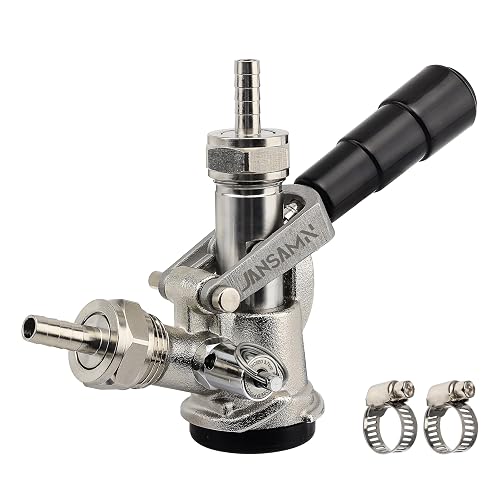
Sankey D Keg Coupler, Beer Kegerator D Style Keg Coupler with Black Handle & Hose Clamp for ID 5/16" Hose, G5/8 Thread Keg Coupler, Sankey D System keg Tap with 304 Stainless Steel Probe
Product Overview
The Sankey D Keg Coupler is a keg coupling component rather than a complete tap assembly. Its job is to seal onto the keg’s D-system valve, let beer flow out through the stainless probe, and connect to the gas and beer lines running into your kegerator. The listing describes it as a Sankey D System keg tap with a black handle, a hose clamp for 5/16-inch hose, a G5/8 thread and a 304 stainless steel probe. Those details tell you what kind of product this is: a functional coupler for a standard Sankey D keg, sized for common draft beer tubing.
For home brewers, a coupler like this is usually the part that gets replaced when a keg system is rebuilt, a line is upgraded, or a second keg is added to a kegerator. Because it is a small and inexpensive-to-replace part in most setups, it tends to be bought as a standalone item rather than as part of a larger kit. The product is aimed at people who already understand draft system basics, including how to match keg couplers to keg valves and how to route gas and beer lines correctly.
Owners generally discuss this type of coupler in terms of fit and sealing. The key question is whether the threads and probe match the keg valve and the coupler’s gas and beer ports line up with the hoses in your system. When those match, the coupler becomes a quiet, reliable part of the draft setup. When they do not, it is usually a compatibility problem rather than a quality problem.
Key Features & Specifications
The table below lists only the specifications stated in the product name or widely associated with this coupler style. Confirm the details against the listing before purchase, because product versions can change.
| Feature | Specification |
|---|---|
| Coupler type | Sankey D System keg coupler |
| Handle | Black handle |
| Hose connection | Hose clamp for 5/16-inch I.D. beer line |
| Thread | G5/8 keg thread |
| Probe material | 304 stainless steel |
| Intended use | Kegerator and draft beer dispensing with standard D-system kegs |
| Included parts | Coupler with hose clamp, as described in the listing |
The 304 stainless steel probe is a practical choice for a beer-contact part because stainless resists corrosion and is straightforward to sanitize. The G5/8 thread is the standard connection on many Sankey-type couplers, which is why compatibility with the keg valve and your existing hardware should be checked carefully. The 5/16-inch I.D. hose size is a common draft line diameter, but measure your existing beer line before buying, since a mismatch will leak or fail to seal.
Pros & Cons
Pros
- Matches the Sankey D keg system, a common setup for home kegerators.
- Stainless steel probe is suited to beer contact and routine sanitizing.
- Specifies a standard G5/8 thread that many D-system kegs use.
- Includes a hose clamp sized for common 5/16-inch beer line.
- Works as a simple replacement part for rebuilding or upgrading an existing kegerator.
- Black handle gives a clear grip when connecting and disconnecting.
Cons
- Only compatible with Sankey D-style kkegs; it will not fit Ball-lock or A-type systems.
- Requires you to already own or source the right gas and beer hardware.
- Not a complete faucet or tap tower, so it does not provide a pour-ready setup on its own.
- Installation involves correctly routing and clamping lines, which can be a challenge for beginners.
- Owners who mismatch thread or hose sizes often report leaks, so careful measuring is essential.
Performance Analysis
Performance for a keg coupler depends on three things: whether it seals to the keg valve, whether the beer line stays secure under pressure, and whether it cleans up easily. Based on the specifications, this coupler is built around a stainless probe and a standard G5/8 thread, which are the two elements most responsible for a good seal and hygienic beer contact. Stainless steel handles repeated cleaning well, and a threaded connection, when properly seated with a gasket in good condition, gives a firm, repeatable seal.
Owner feedback patterns for couplers like this tend to fall into a few predictable groups. The most common complaint is leaking, and in most cases the cause is a worn or missing gasket, a damaged keg valve, or a hose that does not fully fit over the barb before the clamp is tightened. Another frequent theme is difficulty getting a tight seal on older kegs, where valve wear or residue can prevent the probe from fully engaging. Owners who report good results usually emphasize checking the coupler for leaks with a bit of sanitizer or water before pressurizing a full keg, and tightening the hose clamp so the line is held firmly without crushing it.
Flow and pour quality are not really controlled by the coupler itself. Pour speed is governed by gas pressure, line length and diameter, and the faucet at the other end. A coupler with a clean, correctly sized probe passes beer without restriction, so the practical performance question is about sealing and cleanliness rather than flow rate. For a home brewer who wants a reliable connection that can be taken apart and cleaned, the design is appropriate. For someone expecting the coupler to fix pressure or foaming problems, those issues usually lie elsewhere in the system.
Pressure and temperature are the other variables to consider. Keep the kegerator at a stable serving temperature and set gas pressure to match the beer style and line length. Overpressurizing a connection can stress the hose clamp and cause a leak, so the coupler’s performance is only as good as the system it is part of. Consult a professional or the manufacturer’s guidelines if you are unsure about safe pressure settings for your keg and gas setup.
Who Should Buy This Product?
This coupler suits home brewers and hobbyists who already run a Sankey D-system keg and need a replacement or an additional coupler for a kegerator build. It is also a reasonable choice for a budget-minded builder who prefers buying individual stainless components and assembling a system from parts, rather than purchasing a complete tap kit. If you are comfortable measuring hose diameters, checking thread types, and making small adjustments during setup, you will likely get a good result.
You should skip this product if your keg uses a different coupler system, because a D-style coupler will not seal to Ball-lock or A-type valves. Skip it also if you want a finished, ready-to-pour tap with a faucet and tower already assembled, or if you are new to draft systems and want a complete beginner kit with step-by-step components included. In those cases, a complete kit or a model matched to your keg type will save time and avoid compatibility trouble.
Buying Guide
Before buying any keg tap for kegerator, confirm four things: the keg type, the thread, the hose size, and the handle or faucet style you plan to use. Look at the bottom of your keg or the valve itself. D-system kegs typically have a different valve profile from Ball-lock kegs, and a coupler built for one will not seal correctly on the other. Measure your beer line’s inside diameter, because 5/16-inch I.D. is common but not universal. Check whether your gas and beer lines are already installed or whether you need to order them separately.
Consider how you will clean the coupler. A stainless probe and a simple clamp design make routine sanitizing straightforward, while more complex assemblies can trap residue. Plan to replace gaskets periodically, and keep a spare on hand if you use the kegerator often. If you rebuild your system, check each connection for leaks with sanitizer or water before connecting a full keg.
Several well-known alternatives are worth comparing. If you want a second coupler of the same D-system type with a similar stainless probe and clamp setup, the Keg Coupler, Sankey Keg Tap D System ID 5/16” Draft Beer Line (304 Stainless Steel Probe) G5/8 Nuts Commercial Sankey Kegerator D Coupler with 4 Hose Clamps is a comparable option that bundles extra hose clamps.

Keg Coupler, Sankey Keg Tap D System ID 5/16'' Draft Beer Line (304 Stainless Steel Probe) G5/8 Nuts Commercial Sankey Kegerator D Coupler with 4 Hose Clamps
If you need a coupler for a different gas and beer line setup, the Kegerator Coupler for I.D 5/16″ Draft Beer Line Gas Brewing Tubing with Check Valve Sealing Washer Hose Clamp All 304 Stainless Steel Keg Coupler Sankey D-System Beer Coupler includes a check valve and sealing washer, which may suit builders who want those parts in one package.

Kegerator Coupler for I.D 5/16" Draft Beer Line Gas Brewing Tubing with Check Valve Sealing Washer Hose Clamp All 304 Stainless Steel Keg Coupler Sankey D-System Beer Coupler
For more help choosing and maintaining your draft components, read How to Tap a Keg with a Kegerator: Step-by-Step for Home Brewers and How to Clean a Kegerator Tap: Step-by-Step Guide for Home Brewers. If you are still deciding on keg size, Keg Sizes for Kegerator: Which Size Fits Your Home Bar (2026) explains how size affects your setup.
FAQ
Is this coupler compatible with Ball-lock kegs?
No. This is a Sankey D-system coupler, so it is designed for D-style keg valves. Ball-lock kegs use a different valve and coupler system, and a D-style coupler will not seal correctly on them.
What hose size does this coupler need?
The listing specifies a hose clamp for 5/16-inch I.D. beer line. Measure your existing line before buying to confirm the match.
Does it come with a faucet or tap handle?
The listing describes a black handle and a coupler with a hose clamp. It is a keg coupling component, not a full faucet assembly, so you will need a separate faucet or tap tower for a complete pour setup.
Why does my coupler leak?
Leaks usually come from a worn or missing gasket, a damaged keg valve, a hose that is not fully seated over the barb, or a loose clamp. Check each of these points, and test with sanitizer or water before pressurizing a full keg.
How do I clean a stainless keg coupler?
Disassemble the coupler where possible, rinse away beer residue, and sanitize according to your sanitizer’s directions. Stainless steel tolerates routine cleaning well, but gaskets and hoses may need replacing over time.
Can I use this with a corny keg?
Corny kegs come in different valve types. Many home brewers use Ball-lock or Pin-lock corny kegs, which need different couplers. Confirm your keg’s valve type before buying a D-style coupler.
Is stainless steel the right material for a beer coupler?
Stainless steel is commonly used for beer-contact parts because it resists corrosion and is easy to sanitize. Check the listing for the specific grade and material of each component.
Final Verdict
The Sankey D Keg Coupler is a sensible choice for home brewers who already run a Sankey D-system keg and need a stainless, threaded coupler sized for 5/16-inch beer line. It fits a specific and common setup, and it works best for builders comfortable matching threads, hose sizes and keg valve types. Buyers with Ball-lock or A-type kegs, or anyone wanting a complete faucet assembly, should look elsewhere. Confirm compatibility first, and you will have a dependable part for your kegerator.
Related reading
- What Size Keg for Kegerator? 7 Best Picks Compared (2026)
- Top 6 Outdoor Dual Tap Kegerator Picks for Patio Bars (2026)
About Lauren Holland
Lauren Holland is part of our editorial team and reviews and edits our home brewing guides, checking product details against manufacturer specifications and owner feedback.