 By Caleb Morgan
Updated November 2026
A dual tap kegerator conversion kit lets you turn an old refrigerator or freezer into a two-tap draft beer station without buying a dedicated kegerator. This review looks at the VEVOR Kegerator Tower Kit, a dual-tap tower package that includes a dual gauge CGA320 regulator and a D-System keg coupler. It suits home brewers and beer fans who already have a spare fridge, want two beers on tap, and are comfortable with basic plumbing and gas fittings. It is a poor choice for anyone who wants a plug-and-play appliance, has no space for an external CO2 tank, or needs commercial-grade components for heavy daily pouring.

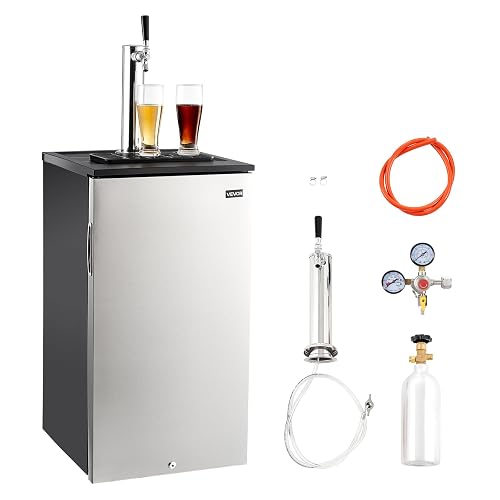
For Party Home, Kegerator Tower Kit, Dual Taps Beer Conversion Kit, with Dual Gauge CGA320 Regulator and D-System Keg Coupler VEVOR Kegerator Tower Kit, Dual Taps Beer Conversion Kit, for Party Home
Product Overview
The VEVOR Kegerator Tower Kit is a conversion package built around a stainless steel tower with two faucets. Its listing name describes it as a dual taps beer conversion kit with a dual gauge CGA320 regulator and a D-System keg coupler, sold for home use. In practical terms, it gives you the parts that sit between a pressurized keg and the taps: the tower, the faucets, the coupler, the regulator and the gas and beer lines that connect them.
The CGA320 fitting is the standard connection for most food-grade CO2 cylinders sold in the United States, so the regulator is designed to attach to the same tank type many homebrewers already use for force carbonation. The dual gauge regulator shows both cylinder pressure and the outlet pressure you dial in for serving. That distinction matters, because cylinder gauges and serving gauges answer different questions: one tells you how much gas is left, the other tells you how hard the beer is being pushed.
The D-System coupler is the piece that matters most for compatibility. D-System couplers fit a specific style of keg valve, so before buying you should confirm that your kegs use this type. Many commercial kegs and a growing share of homebrew kegs use D-System fittings, but older or mixed-fleet setups sometimes use other coupler styles. If your kegs are a different type, you will need a different coupler or an adapter, and the kit alone will not solve that.
The kit is intended for installation on a refrigerator, freezer or similar cold box with enough interior room for the kegs and a tower mount through the door or top panel. Installation generally involves drilling a hole for the tower shank, running beer and gas lines through the cabinet wall, and securing the tower firmly so it does not rock under the weight of the faucet handles.
Key Features & Specifications
The table below lists the features that the product name states or that are standard for this type of kit. Where specifics such as exact tower height or tubing length vary by shipment, check the listing before you order.
| Feature | Details |
|---|---|
| Tap configuration | Dual taps (two faucets on one tower) |
| Regulator | Dual gauge CGA320 regulator |
| Gas connection | CGA320 fitting for standard food-grade CO2 cylinders |
| Keg coupler | D-System keg coupler |
| Intended use | Home kegerator or refrigerator conversion |
| Tank included | No CO2 tank included; a separate cylinder is required |
| Installation | Requires drilling for the tower and routing beer and gas lines |
Because the kit does not include a CO2 cylinder, budget for a tank, a fill source and a way to store it upright. Manufacturers of conversion kits generally specify that the cylinder should be secured and kept in a ventilated area, not inside a sealed cabinet with the kegs.
Pros & Cons
Pros
- Two taps let you serve two beers or a beer and a cider without a second system.
- The dual gauge regulator gives you visibility into both cylinder pressure and serving pressure.
- The CGA320 fitting matches the most common CO2 cylinder connection in homebrewing.
- The D-System coupler is compatible with a widely used keg valve style.
- A complete tower package means fewer separate purchases to assemble a working system.
- Suited to a spare fridge or freezer, which avoids buying a dedicated kegerator.
Cons
Performance Analysis
Performance in a conversion kit depends less on the tower itself and more on how well the regulator, line length and cold-box temperature work together. The regulator is the central control. Set the outlet pressure too high and the beer pours foamy. Set it too low and the beer pours flat or slow. For most ales served at refrigerator temperatures, many brewers begin in the range of about 10 to 12 psi and adjust from there, then fine-tune line length to balance flow. Lines that are too short let gas push through and create foam; lines that are too long slow the pour and can also cause problems if the beer is not properly chilled.
The dual gauge design helps with this process. Watching the outlet gauge while you tune the pressure lets you hold a steady value rather than guessing, and watching the cylinder gauge tells you when a refill is due. Owners frequently report that once a system is balanced, it pours consistently, but that the first week of tuning is where most frustration occurs.
Two taps on one tower introduce a practical concern: running two beers at different carbonation levels from the same regulator is not possible without separate gas control or a balancing approach. Most people running two taps either keep both beers at a similar carbonation level or use a manifold with individual regulation. Plan for that before you assume both faucets will behave independently.
Temperature control is the other major variable. A kegerator conversion relies on the fridge or freezer thermostat to hold the beer cold. Freezers used as kegerators often need an external temperature controller, because their default thermostats are not set for beer-serving temperatures. Refrigerators typically work with less modification but still benefit from keeping the kegs fully inside the cold zone.
Who Should Buy This Product?
This kit fits buyers who already own a spare refrigerator or freezer, have kegs with D-System valves, and want two taps without buying a complete commercial-style unit. It also suits people who enjoy tuning a system and are willing to spend a few evenings on installation and pressure balancing. Homebrewers moving from bottles to draft are a natural audience, especially if they plan to rotate between two styles.
You should skip this kit if your kegs use a different coupler style, if you want a sealed appliance with no drilling, or if you need to serve beer at high volume for an event where reliability matters more than cost. Buyers who are uncomfortable with compressed gas, or who do not have a safe place to store a CO2 cylinder, should look at a complete commercial kegerator or consult a professional installer before proceeding. Compressed gas and cylinder handling carry real risk, so confirm that your setup follows the cylinder manufacturer’s guidance.
Buying Guide
Start with compatibility. Look at the valve on your kegs. If it matches the D-System style, this kit can work. If it does not, a different coupler or an adapter is the first thing to source. Next, confirm that your cold box has room for two kegs plus a CO2 cylinder outside the sealed interior, and that the top or door panel can accept a tower shank. Measure before you drill.
Then plan the gas side. A CGA320 regulator needs a matching cylinder, and you will want a fill plan, whether that is an exchange program or a local fill station. Check that the cylinder is secured upright and that the regulator is leak-tested after installation using soapy water on each fitting. Bubbles mean a leak.
Finally, weigh the alternatives. If you want a different tap count or a different regulator design, two well-known options are worth comparing:
- BACOENG Double Faucet Tower Beer Kegerator Conversion Kit with Dual Gauge Regulator, No Tank Stainless Steel Keg Tower: a dual-faucet tower with a dual gauge regulator and no tank included, for buyers who want a similar layout from a different maker.

BACOENG Double Faucet Tower Beer Kegerator Conversion Kit with Dual Gauge Regulator, No Tank Stainless Steel Keg Tower
- Kegco Standard 2-Tap Tower Kegerator Conversion Kit with No CO2 Tank: a two-tap tower kit from a brand many kegerator owners know, also without a tank.
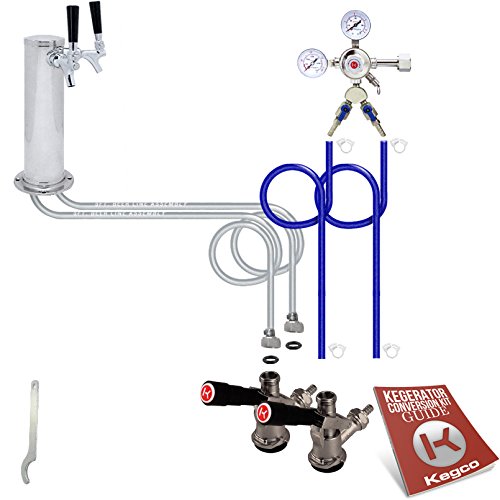
Kegco Standard 2-Tap Tower Kegerator Conversion Kit with No CO2 Tank
For more context on comparing options, see 7 Best Two Tap Kegerator Kits for Home Bars (2026) and 6 Best Double Tap Kegerator Kit Options for Home Bars (2026). If your fridge is a freezer, Freezer Conversion to Kegerator: 7 Best Kits and Units Compared (2026) covers the temperature control issues in more depth. Buyers using a standard fridge may find 7 Best Kegerator Kits for Refrigerator Conversions of 2026 useful, and anyone with ball-lock kegs should read Ball Lock Kegerator Homebrew Conversion Kit: Step-by-Step Guide (2026) before committing.
FAQ
Does the VEVOR kit include a CO2 tank?
No. The listing describes a tower, regulator and coupler, and a separate CGA320 food-grade CO2 cylinder is required. Plan for the tank and a secure way to store it upright outside the sealed beer compartment.
Will this kit fit any keg?
Only kegs with a compatible D-System valve style. Check your kegs before ordering, because mismatched couplers will not seal and will leak gas.
Can I run two different beers at once?
You can, but both taps share one gas supply in a basic setup. Beers at different carbonation levels will be hard to balance. Many owners keep both beers at similar carbonation or add separate regulation. Worth reading next: Convert Single Tap Kegerator to Dual Tap: 7 Best Kits Compared (2026).
What pressure should I set?
Many brewers start around 10 to 12 psi for ales at refrigerator temperature and adjust from there. Tune the line length alongside pressure so the beer pours smoothly without excessive foam.
Can I install this in a freezer?
Often yes, but freezers usually need an external temperature controller because their default thermostats are not set for serving temperatures. Check your cabinet’s ability to hold a steady cold range before installing.
Do I need to drill into my fridge?
Typically yes, because the tower shank must pass through the top or door panel. Measure carefully, confirm there are no wires or cooling components behind the drill point, and seal the opening afterward.
How do I check for gas leaks?
Mix a little dish soap with water and brush it onto each fitting while the system is pressurized. Bubbles indicate a leak. Tighten and retest until the fitting holds. If a leak persists, consult a professional before continuing.
Final Verdict
The VEVOR Kegerator Tower Kit is a reasonable option for home brewers who already own a spare refrigerator or freezer, have D-System kegs, and want two taps with a dual gauge CGA320 regulator. Its strengths are the practical regulator layout and the complete tower package. Its limits are the missing CO2 tank, the drilling and gas-line work, and the need to confirm coupler compatibility before you buy. Buyers who are comfortable with that setup and who plan their gas supply in advance will likely find it a sensible way to serve two draft beers at home.
Before you buy: helpful guides
About Caleb Morgan
Caleb Morgan is part of our editorial team and reviews and edits our home brewing guides, checking product details against manufacturer specifications and owner feedback.