 By Caleb Morgan
Updated November 2026
A kegerator dual tap kit lets you convert an existing fridge or freezer into a home bar that pours two beers at once, which is handy if you alternate between a lager and an IPA or want to keep a stout and a cider on hand for guests. This review covers the For Party Home Kegerator Tower Kit with dual taps, a dual gauge CGA320 regulator and a D-System keg coupler. It is a good fit for home brewers and beer fans who already own a keg-compatible cooler, have a basic comfort level with CO2 and gas lines, and want a tower without paying for a complete kegerator. It is a weaker choice for anyone who wants plug-and-play setup, a fully built cabinet, or a tower that handles more than two taps. Before buying, confirm your keg type and coupler compatibility, since mismatched couplers are the most common source of frustration with conversion kits.

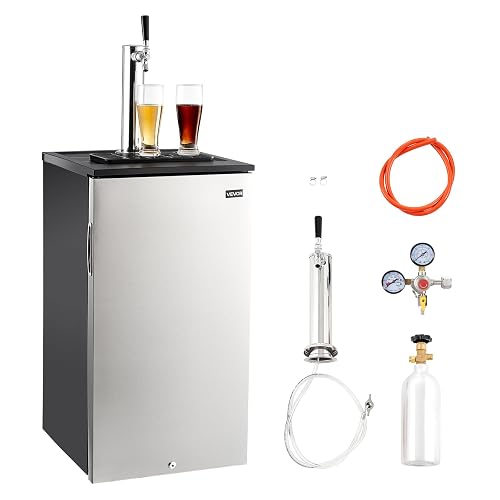
For Party Home, Kegerator Tower Kit, Dual Taps Beer Conversion Kit, with Dual Gauge CGA320 Regulator and D-System Keg Coupler VEVOR Kegerator Tower Kit, Dual Taps Beer Conversion Kit, for Party Home
Product Overview
The VEVOR-branded kegerator tower kit sold under the For Party Home name is a conversion kit rather than a finished appliance. You supply the refrigerated space, the CO2 cylinder and the kegs. The kit supplies the tower, two faucets, the regulator and the coupler that connects to a standard keg. Kits in this category are designed for people who already have a cold box, often a chest freezer or an older refrigerator, and want to turn it into a draft station.
The defining feature here is the dual tap configuration. Two faucets mean you can pour from two separate kegs without swapping lines, which is the main reason people step up from a single-tap setup. The dual gauge regulator matters too: it shows you both cylinder pressure and the outlet pressure going to the keg, so you can see at a glance whether your CO2 is running low or your serving pressure has drifted.
Because this is a conversion kit, the quality of your final setup depends heavily on the cooler you pair it with, the length and fit of your beer and gas lines, and how carefully you balance your system. Expect to spend time on assembly and leak-checking the first time through.
Key Features & Specifications
The table below lists what the product name states and the features that are standard for this type of kit. Confirm exact dimensions and fittings on the listing before ordering.
| Feature | What It Means |
|---|---|
| Tap configuration | Dual taps (two faucets on one tower) |
| Regulator | Dual gauge CGA320 regulator (CGA320 is the standard fitting for most US CO2 cylinders) |
| Coupler | D-System keg coupler (fits D-System kegs, the common type for many commercial beer brands) |
| Tower type | Tower kit, designed to mount on a cooler or fridge collar |
| CO2 tank | Not included; you supply your own cylinder |
| Keg or cooler | Not included; you supply your own |
| Intended use | Home bar and party use, converting a fridge or freezer into a draft system |
The CGA320 fitting is worth noting. It is the most common connection for US CO2 cylinders, so if you already have a standard tank, you should be able to attach the regulator directly. Confirm the coupler type, because D-System and Sankey (also called Sanke) kegs use different couplers. If your kegs are Sankey, you will need a different coupler or an adapter.
Pros & Cons
Pros
- Dual taps let you pour two beers without swapping kegs or lines.
- The dual gauge regulator shows both cylinder pressure and serving pressure, which makes troubleshooting easier.
- The CGA320 fitting matches standard US CO2 cylinders.
- A conversion kit lets you reuse a cooler you already own instead of buying a full kegerator.
- A budget-friendly option for home brewers building their first multi-tap setup.
Cons
- Not a complete kegerator, so you need a suitable cooler, a CO2 tank and kegs before you can pour.
- The D-System coupler limits you to D-System kegs unless you buy an adapter.
- Assembly and balancing take patience, and first-time users often need several tries to get the pour right.
- Owners often report that the included line fittings and clamps need tightening before the system holds pressure.
- Two taps is the ceiling; if you want three or four, you will need a different tower.
Performance Analysis
Performance in a kegerator setup depends on three things: how well the tower is built, how accurately the regulator holds pressure, and how well the whole system is balanced. Because this is a research-based review, the following reflects specifications and common patterns in owner feedback for kits of this type, not personal testing.
On the regulator side, a dual gauge design is a real advantage. The inlet gauge tells you how much gas is left in the cylinder, and the outlet gauge shows the pressure delivered to the keg. Most home draft beer is served somewhere around 10 to 12 psi at cold temperatures, though the right number depends on your beer style, line length and temperature. Owners of dual gauge kits generally report that being able to watch the outlet pressure makes it much easier to dial in a clean pour.
Line balance is where most setups succeed or fail. Balanced draft means the resistance in the beer line matches the pressure from the regulator, so the beer pours smoothly rather than foaming. A common approach is to use a longer beer line at a low pressure or a shorter line at a higher pressure. Many owners of conversion kits end up replacing the included beer line with a food-grade vinyl or barrier line of a known length, because it gives them more control over balance. Plan on at least one round of adjustment.
Two taps add a practical layer of complexity. Each faucet has its own line, and the two lines should be sized to match their own kegs. If one keg is nearly empty and the other is full, the pressure behavior can differ, so owners sometimes report that they need to adjust per keg. Keep both kegs at the same temperature for the most consistent results.
Temperature control is entirely up to your cooler. A thermostat that holds steady near 36 to 38 degrees Fahrenheit gives you the best results for most lagers and ales. Freezers with an external temperature controller are popular with home brewers for exactly this reason.
Who Should Buy This Product?
This kit suits you if you already have a keg-compatible cooler or are willing to buy one, and you want to pour two styles at once without the cost of a finished kegerator. It also suits home brewers who have experience with CO2 and gas lines, or who are willing to learn. Party hosts who serve two beers at gatherings will find the dual tap layout useful.
You should skip this kit if you want a finished, plug-and-play appliance, if you are uncomfortable working with gas fittings and pressure, or if you need more than two taps. You should also skip it if your kegs are Sankey type and you do not want to buy an adapter, since the coupler will not fit directly. Anyone who wants a complete warranty-backed system from a single manufacturer may prefer a finished kegerator instead.
Buying Guide
Before you buy any kegerator dual tap kit, work through these checks.
- Confirm your keg type. D-System, Sankey and Ball-lock kegs each use different couplers. Match the coupler to the kegs you plan to buy or already own.
- Check the regulator fitting. Most US CO2 cylinders use CGA320. If you have a different tank type, you will need an adapter.
- Measure your cooler. Make sure the tower collar and shank length fit your fridge or freezer. Shank length determines how the tower sits relative to the cooler wall.
- Plan your line length. Buy or measure beer line before you assemble the kit, so you can balance your system from the start.
- Decide on temperature control. A reliable thermostat or external controller matters more than the tower itself for consistent pours.
If this kit does not match your setup, two well-known alternatives are worth a look. The

BACOENG Double Faucet Tower Beer Kegerator Conversion Kit with Dual Gauge Regulator, No Tank Stainless Steel Keg Tower
is a double faucet tower conversion kit with a dual gauge regulator and no CO2 tank included, and it is a common choice for home bars that want a similar dual-tap layout. View on Amazon
The
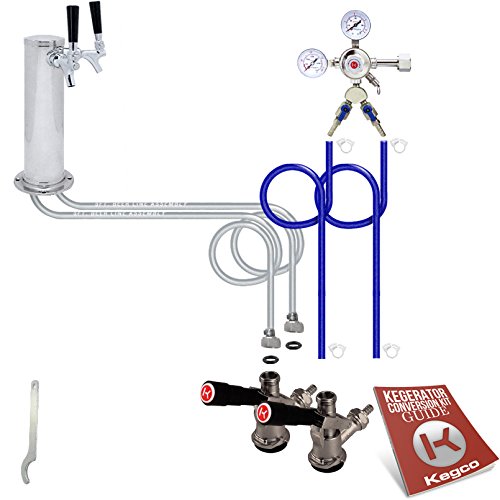
Kegco Standard 2-Tap Tower Kegerator Conversion Kit with No CO2 Tank
is a standard 2-tap tower kit from Kegco, a brand that many home bar owners know, and it is also sold without a CO2 tank. View on Amazon
For more context on comparable options, see Dual Tap for Kegerator: 6 Best Picks for Home Bars (2026) and 7 Best Two Tap Kegerator Kits for Home Bars (2026). If you are working with a freezer, Freezer Conversion to Kegerator: 7 Best Kits and Units Compared (2026) covers the cooler side in more detail, and How to Set Up Kegerator Regulator (2026): Single-Gauge vs Dual-Gauge Regulators explains the regulator choice step by step.
FAQ
Do I need a CO2 tank to use this kit?
Yes. The kit includes the regulator, taps, tower and coupler, but not the CO2 cylinder. You will need a cylinder with a CGA320 fitting, and you should confirm the fill level and whether it is refillable at a local gas supplier.
Will it work with Sankey kegs?
Not without an adapter or a different coupler. The included coupler is a D-System type, and Sankey kegs use a different fitting. Check the listing and your keg type before ordering.
Can I use it with a chest freezer?
Yes, many home brewers convert chest freezers for this purpose. You will need an external temperature controller to hold the freezer at a steady serving temperature, and you will need to drill or modify the collar to fit the tower.
What pressure should I set the regulator to?
A common starting point for cold draft beer is around 10 to 12 psi, but the right setting depends on your beer style, line length and temperature. Start low, let the keg carbonate, and adjust in small steps.
Why is my beer foaming?
Foaming usually means the system is out of balance: the pressure is too high for the line length, the beer is too warm, or the keg is not carbonated correctly. Check your line length, lower the pressure or lengthen the line, and confirm your cooler is holding a steady temperature.
Is this kit suitable for beginners?
It can be, but expect a learning curve. Beginners who are comfortable with basic plumbing and who read up on draft balance tend to do well. If you want a simpler start, a finished kegerator may be easier.
How do I keep the lines clean?
Clean lines regularly with a line cleaning solution and rinse thoroughly before pouring. Regular cleaning prevents off-flavors and buildup in the faucet and tower.
Final Verdict
Is the kegerator dual tap kit worth it?
For a home brewer or beer fan who already has a suitable cooler and is comfortable with gas and pressure, this dual tap kit is a practical way to pour two beers at once without buying a complete appliance. Its dual gauge regulator and CGA320 fitting are real strengths, and the dual tap layout covers most home bar needs. The trade-offs are the need for your own cooler, CO2 and kegs, the D-System coupler limit, and the setup work involved. If those trade-offs suit you, it is a sensible choice. If you want a plug-and-play appliance, look at a finished kegerator instead. View on Amazon
Note: Gas and pressure equipment should be installed carefully. If you are unsure about regulator setup, CO2 safety or electrical work on a converted freezer, consult a qualified professional.
Before you buy: helpful guides
About Caleb Morgan
Caleb Morgan is part of our editorial team and reviews and edits our home brewing guides, checking product details against manufacturer specifications and owner feedback.