 By Graham Fisher
Updated November 2026
Choosing a homebrew equipment starter kit is the fastest way to get from curiosity to your first batch, but the market is crowded and the bundles look similar on the listing page. What matters is whether the kit includes a fermenter you can actually control, the right sanitizing and transfer tools, and enough detail in the instructions to get you through bottling day. This roundup compares six kits on those criteria: what each one includes, what style of brewing it supports, how much hands-on setup it needs, and how well it suits a first-time brewer working in a small space.
Our top picks at a glance
- 1
 TOP CHOICEBest overallNorthern Brewer Homebrewing Starter Kit w/Equipment, Chinook IPA, 5 GalView on Amazon
- 2
 TOP CHOICEBest for small kitchensCraft A Brew – Oktoberfest Ale – Beer Making Kit – Make Your Own Craft Beer – 1 GallonView on Amazon
- 3
 TOP CHOICEBest budget pickGold Complete Beer Equipment Kit (K7) with 5 gal Glass CarboyView on Amazon
- 4
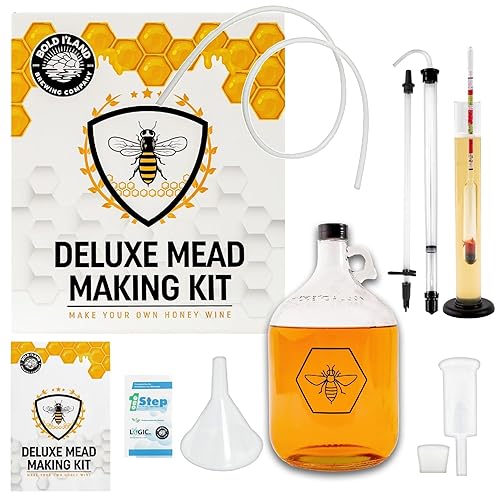 Best for meadComplete Mead Making Kit for Beginners – Home Brewing Starter KitView on Amazon
- 5
 Best for wine and mead togetherWine Making Kit & Mead Making Kit | Complete Home Brewing Kit for BegiView on Amazon
- 6
 Best for compact conical fermentingRevolutionary Signature Pro – 2 Gallon Conical Beer Kit with BottlesView on Amazon
Our Top Picks
Quick Comparison
| Product | Best for | Key feature |
|---|---|---|
| Northern Brewer Homebrewing Starter Kit w/Equipment, Chinook IPA, 5 Gal | Beginners who want a full beer setup in one box | Five-gallon batch with a recipe ingredient kit |
| Gold Complete Beer Equipment Kit (K7) | Budget-minded brewers moving up from extract kits | 5-gallon glass carboy |
| Craft A Brew – Oktoberfest Ale Beer Making Kit | Small kitchens and one-gallon experiments | One-gallon batch size |
| Complete Mead Making Kit for Beginners | Honey-based fermentation | 1-gallon glass jug carboy with hydrometer |
| Wine Making Kit & Mead Making Kit | Brewers who want wine and mead options | Glass carboy with fermenter and siphon |
| Revolutionary Signature Pro – 2 Gallon Conical Beer Kit | Brewers who want a conical fermenter | Conical fermenter with bottles included |
Northern Brewer Homebrewing Starter Kit w/Equipment, Chinook IPA, 5 Gal
Northern Brewer Homebrewing Starter Kit w/Equipment, Chinook IPA, 5 Gal
Best for: Beginners who want a complete five-gallon beer setup with ingredients included
This is the kit most first-timers reach for when they want to skip sourcing parts separately. It is built around a Chinook-hopped IPA recipe, so the ingredients and equipment arrive together and the instructions are written around that specific batch.
Key specs
- Batch size: 5 gallons (per listing)
- Style: IPA (Chinook hops, per listing)
- Includes equipment and ingredients (per listing)
Pros
- Everything needed for a first five-gallon batch arrives in one package
- Recipe-specific instructions reduce guesswork on brew day
- Five-gallon batch size gives enough beer to learn from across several sessions
Cons
- Limits you to the included recipe until you buy additional ingredients
- Requires a stovetop large enough for a full boil
Bottom line: A strong pick for someone who wants the least guesswork on a first full-size beer batch.
Gold Complete Beer Equipment Kit (K7) with 5 gal Glass Carboy
Gold Complete Beer Equipment Kit (K7) with 5 gal Glass Carboy
Best for: Budget-minded brewers who want a five-gallon glass carboy setup
This kit suits brewers who already know they enjoy homebrewing and want a sturdy, full-size fermentation vessel without paying for extras they will not use. Owners often mention the glass carboy as a reason they chose it over plastic.
Key specs
- Fermenter: 5-gallon glass carboy (per listing)
- Kit type: beer equipment kit (per listing)
Pros
- Glass carboy is easy to clean and does not scratch the way plastic can
- Five-gallon capacity matches most recipes
- Good starting point for a brewer building out a setup over time
Cons
- Glass is heavy and fragile when full, so handling needs care
- Ingredients are not included, so you will need to buy them separately
Bottom line: Best for a brewer who wants a reliable full-size fermenter and is comfortable sourcing ingredients.
Craft A Brew – Oktoberfest Ale – Beer Making Kit – Make Your Own Craft Beer – 1 Gallon
Craft A Brew – Oktoberfest Ale – Beer Making Kit – Make Your Own Craft Beer – Complete Equipment and Supplies – Starter Home Brewing Kit – 1 Gallon
Best for: Small kitchens and one-gallon experiments
A one-gallon kit is a practical choice for apartment brewers or anyone who wants to test a style before committing to a full batch. The smaller volume also means less equipment to store and less beer to dispose of if something goes wrong.
Key specs
- Batch size: 1 gallon (per listing)
- Style: Oktoberfest ale (per listing)
Pros
- Small batch fits on a standard countertop and in a small pot
- Complete kit reduces the number of separate purchases
- Good for learning sanitation and fermentation basics at low stakes
Cons
- One gallon yields only about ten 12-ounce bottles
- Scaling up later means buying a different set of equipment
Bottom line: The right choice for a brewer with limited space who wants to practice before scaling up.
Complete Mead Making Kit for Beginners – Home Brewing Starter Kit
Complete Mead Making Kit for Beginners – Home Brewing Starter Kit – Includes 1 Gallon Glass Jug Carboy – Alcohol Hydrometer for Alcohol Test – Auto Siphon – Airlock – How to Guide and More
Best for: Honey-based fermentation
Mead has different fermentation needs than beer, and this kit is aimed at brewers who want to start with honey instead of malt. It includes the basic measuring and transfer tools needed for a small batch.
Key specs
- Fermenter: 1-gallon glass jug carboy (per listing)
- Includes alcohol hydrometer, auto siphon and airlock (per listing)
Pros
- Includes a hydrometer so you can track sugar drop and estimate alcohol content
- Auto siphon simplifies racking
- Written guide included for first-time mead makers
Cons
- One-gallon batch limits how much mead you produce per session
- Honey costs add to the overall cost of each batch
Bottom line: A focused pick for someone who wants to make mead specifically rather than beer.
Wine Making Kit & Mead Making Kit | Complete Home Brewing Kit for Beginners & Experts
Wine Making Kit & Mead Making Kit | Complete Home Brewing Kit for Beginners & Experts – Includes Glass Carboy, Fermenter, Hydrometer, Siphon, Airlock & More | DIY Wine Brewing Equipment
Best for: Brewers who want wine and mead options from one kit
This kit is built for people who are not yet sure whether beer, wine or mead is their favorite. The shared equipment covers all three, so you can try different fermentations without buying a new set each time.
Key specs
- Includes glass carboy, fermenter, hydrometer, siphon and airlock (per listing)
- Supports wine and mead making (per listing)
Pros
- Versatile across wine and mead styles
- Equipment list covers the core fermentation tools
- Suitable for both beginners and more experienced brewers
Cons
- Not designed specifically for beer brewing, so you may need extra gear for all-grain work
- Ingredient kits are sold separately
Bottom line: Good for a brewer who wants flexibility across fermented beverages rather than beer alone.
Revolutionary Signature Pro – 2 Gallon Conical Beer Kit with Bottles
Revolutionary Signature Pro – 2 Gallon Conical Beer Kit with Bottles
Best for: Brewers who want a conical fermenter in a compact size
Conical fermenters make it easier to collect yeast and trub from the bottom of the vessel, which many brewers prefer for cleaner beer. This kit brings that approach into a two-gallon size that suits smaller batches.
Key specs
- Batch size: 2 gallons (per listing)
- Fermenter: conical (per listing)
- Includes bottles (per listing)
Pros
- Conical shape supports yeast and trub collection at the bottom
- Two-gallon batch is manageable for a first conical experience
- Bottles included reduce separate purchases
Cons
- Smaller batch size than five-gallon kits
- Conical fermenters often require attention to temperature control to perform well
Bottom line: A good fit for a brewer who wants to explore conical fermentation without moving to a large vessel.
Buying Guide
Batch size and fermenter capacity
Batch size determines how much beer, wine or mead you produce and how much space you need. Five-gallon kits suit brewers who want to share and store beer. One-gallon kits suit small kitchens and trial batches. Check that the fermenter is at least 20 percent larger than your target volume to leave headspace for foam during active fermentation.
Good picks for this: Northern Brewer Homebrewing Starter Kit, Craft A Brew Oktoberfest Ale Kit
Fermenter material
Glass carboys are non-porous and easy to sanitize, but they are heavy and can break. Plastic buckets are lighter and more forgiving to handle but can scratch over time, which makes sanitizing harder. Conical fermenters allow yeast to settle at the bottom for easier removal. Pick the material based on how you plan to move the fermenter and how much space you have to store it.
Good picks for this: Gold Complete Beer Equipment Kit, Revolutionary Signature Pro
Included tools and accessories
Look for a hydrometer, airlock, siphon or auto siphon, and a sanitizer or cleaning solution. A kit missing these will require extra purchases before your first batch. Check the listing for a clear list of what is included, not just the headline product.
Good picks for this: Complete Mead Making Kit, Wine Making Kit & Mead Making Kit
Ingredients included or sold separately
Some kits include a recipe ingredient pack, while others provide only equipment. Kits with ingredients are easier for first-time brewers because the recipe has been balanced for the included malt and hops. Equipment-only kits give you more flexibility but require you to source ingredients and understand recipe design.
Good picks for this: Northern Brewer Homebrewing Starter Kit, Gold Complete Beer Equipment Kit
Your fermentation style
Beer, wine and mead each have different needs. Beer typically ferments at 60 to 70 degrees Fahrenheit depending on yeast strain. Wine and mead have their own temperature and nutrient needs. A kit designed for one style may need supplementing for another, so match the kit to what you actually want to make.
Good picks for this: Complete Mead Making Kit, Wine Making Kit & Mead Making Kit
Cleaning and sanitation readiness
Sanitation is the most common cause of off-flavors in homebrew. Make sure the kit gives you a clear path to sanitizing every surface that touches the wort or must. Plan to buy a no-rinse sanitizer if the kit does not include one. Cleaning your gear before and after each batch is a habit worth building from the start.
Good picks for this: Gold Complete Beer Equipment Kit, Revolutionary Signature Pro
Storage space and handling
A five-gallon fermenter full of wort can weigh over 40 pounds. Measure the shelf or floor space where you will ferment and store bottles or kegs before ordering. Glass carboys need a stable, low-traffic spot away from direct sunlight.
Good picks for this: Craft A Brew Oktoberfest Ale Kit, Revolutionary Signature Pro
FAQ
What is included in a homebrew equipment starter kit?
Most kits include a fermenter, airlock, bottling or transfer tool, and sometimes a hydrometer and sanitizer. Some also include recipe ingredients. Always check the listing to confirm what is in the box.
Do I need a kettle for a starter kit?
For all-grain or full boil brewing you will need a kettle large enough for your batch size. Many extract kits can be brewed in a large stockpot. Check whether the kit assumes you already have a boiling vessel.
How long does a first batch take?
Brew day usually takes three to five hours for a beginner. Fermentation typically takes one to two weeks, and conditioning in bottles takes at least two more weeks before the beer is ready to drink.
Can I use a starter kit for wine or mead instead of beer?
Some kits are designed for wine and mead specifically, while beer kits focus on malt and hops. Read the included recipe and equipment list to confirm the kit suits the style you want to make.
Is a glass carboy better than a plastic bucket?
Glass is easier to clean thoroughly and does not hold scratches, but it is heavy and breakable. Plastic buckets are lighter and more forgiving to move. Both work well when sanitized properly.
How should I clean and sanitize my equipment?
Clean with a dedicated brewing cleaner, rinse thoroughly, then sanitize with a no-rinse sanitizer shortly before use. Sanitizing right before each contact prevents contamination. See the site guide on cleaning and sanitizing homebrew equipment for more detail.
Conclusion
For most beginners, the Northern Brewer Homebrewing Starter Kit is the most complete choice because it bundles equipment and a recipe. Brewers on a tighter budget who want a full-size glass fermenter will find the Gold Complete Beer Equipment Kit a solid base. Small-space brewers should look at the one-gallon Craft A Brew kit, while mead enthusiasts will prefer the dedicated mead kit. Wine and mead explorers can use the combined kit, and anyone curious about conical fermentation will find the Revolutionary Signature Pro a manageable entry point. Match the kit to your batch size, your fermentation style and the space you have, and your first batch will be far easier to get right.
Sources
- Food safety guidance relevant to fermentation and home food preparation (fda.gov)
- Guidance on sanitation and food handling practices (usda.gov)
- Research-based extension resources on home fermentation and food science (extension.org)
Related reading
- Northern Brewer Homebrew Starter Kit: Step-by-Step Setup Guide
- Northern Brewer Deluxe Homebrew Starter Kit: Step-by-Step Setup for Beginners
- Northern Brewer Brew Share Enjoy Homebrew Starter Kit: Step-by-Step Setup (2026)
About Graham Fisher
Graham Fisher is part of our editorial team and reviews and edits our home brewing guides, checking product details against manufacturer specifications and owner feedback.