 By Caleb Morgan
Updated November 2026
If you are deciding between a kegerator fridge or freezer for your home bar, the short answer is this: a purpose-built kegerator or a converted chest freezer suits most home brewers who keep several kegs on tap, while a standard refrigerator is only a practical choice if you plan to serve one or two kegs and have very little floor space. Each option has trade-offs in temperature stability, capacity and how much work the setup takes.
| Criteria | Kegerator (purpose-built) | Chest freezer conversion | Standard fridge conversion |
|---|---|---|---|
| Keg capacity | Usually one to three corny or sixtel kegs | Two to four kegs, plus room for fermenters | One or two kegs in most models |
| Temperature control | Built-in thermostat set for serving | Needs an external controller for accuracy | Needs an external controller, often less stable |
| Setup effort | Plug in, add gas and lines | Drill tap tower, add controller and collar | Modify shelves, add controller and tower |
| Footprint | Compact, fits under a counter | Wide and deep, needs floor space | Tall and narrow, fits a corner |
| Energy use | Efficient for its size | Efficient when well insulated | Often higher per cubic foot |
Temperature Control and Serving Accuracy
A purpose-built kegerator wins on convenience because its thermostat is designed to hold serving temperatures, usually around 36 to 40 °F for lagers and slightly warmer for ales. A chest freezer or fridge will hold temperature well only after you add an external controller, such as an inkbird-style digital unit, which cycles power to the compressor. Once dialed in, both conversions perform reliably, but the purpose-built unit needs less tinkering.
Capacity and Room for Growth
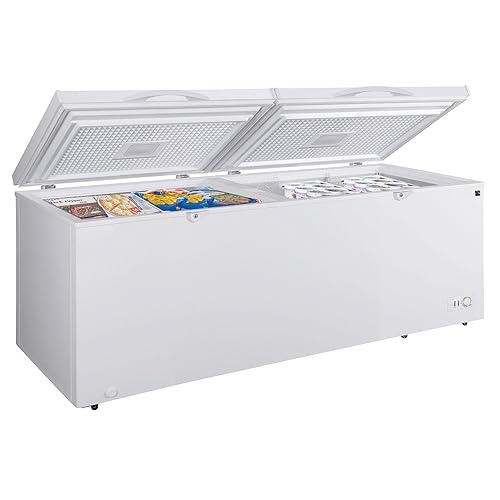
The chest freezer conversion wins for capacity. Its deep interior lets you run several corny kegs, a CO2 tank and room for a fermentation bucket on the floor. A kegerator holds one to three kegs, which is enough for most small bars, but if you plan to rotate many styles you will feel the limit quickly. A standard fridge sits between the two, offering limited keg space but the easiest access in a kitchen.
Setup Effort and Foam Risk
The purpose-built kegerator is the clear winner for beginners. Its tap tower and collar are already sized, so you only connect gas and beer lines. Conversions take more work: you must drill the collar, route the shank through the lid or wall and balance line length to avoid foam. Poorly balanced lines are the most common cause of foaming, so a converted fridge or freezer is best for builders comfortable with that step.
Footprint and Energy Use
For tight spaces, the kegerator fridge or freezer question usually comes down to dimensions. A compact kegerator slides under a counter, while a chest freezer needs a dedicated spot on the floor. A standard fridge is tall but narrow, so it suits a corner of the kitchen or garage. Chest freezers are generally efficient at holding temperature, but check the energy label on any used unit before buying.
Pros & Cons
Kegerator (purpose-built)
- Pro: Ready to serve with a built-in thermostat and tap tower.
- Pro: Compact footprint that fits under a counter.
- Con: Limited to one to three kegs.
Chest freezer conversion
- Pro: Holds two to four kegs with room for extras.
- Pro: Efficient insulation keeps temperature steady.
- Con: Requires drilling, an external controller and a large floor area.
Standard fridge conversion
- Pro: Easy access and fits a kitchen corner.
- Pro: Familiar appliance for most builders.
- Con: Less keg space and less stable temperature without a controller.
Which Should You Choose?
- Choose a purpose-built kegerator if you want the fastest setup, serve one to two kegs and value a compact footprint.
View on Amazon - Choose a chest freezer conversion if you run several kegs, ferment at home and have floor space.
View on Amazon - Choose a standard fridge conversion if you have a kitchen corner, a single keg and enjoy a hands-on build.
View on Amazon
For step-by-step guidance on the conversion path, see Converting a Fridge Into a Kegerator: A Step-by-Step Guide for Home Brewers and Turn Mini Fridge Into Kegerator: 6 Best Kits and Units Compared (2026). If you want to plan a mixed setup, Wine Fridge Kegerator Combo: How to Build One for Your Home Bar (2026) covers the layout.
FAQ
Is a chest freezer better than a fridge for a kegerator?
In most cases, yes. A chest freezer has more interior space, better insulation and room for multiple kegs. A fridge works well for one or two kegs when floor space is limited.
Do I need a temperature controller for a converted unit?
Yes. Standard freezers and fridges are built to hold cold temperatures, not serving temperatures. An external digital controller keeps the beer near the target range and prevents freezing.
Which option is easiest for a beginner?
A purpose-built kegerator is the simplest, since the tap tower and thermostat are already set up. Conversions take more time and carry a higher risk of foaming if lines are not balanced.
Conclusion
A purpose-built kegerator suits beginners and small bars, while a chest freezer conversion is the better choice for multiple kegs and home fermentation. A standard fridge works for a single keg in a tight kitchen. Match the choice to your keg count, space and willingness to build, and check the manufacturer specs before you start.
Related reading
- Turning Mini Fridge Into Kegerator: A Step-by-Step Guide for Beginners
- Mini Fridge to Kegerator Conversion: A Step-by-Step Guide for Beginners
- Mini Fridge to Kegerator Conversion Kit: 6 Best Picks for Home Bars (2026)
About Caleb Morgan
Caleb Morgan is part of our editorial team and reviews and edits our home brewing guides, checking product details against manufacturer specifications and owner feedback.