 By Caleb Morgan
Updated November 2026
A 5 gallon wine making starter kit bundles the fermenter, airlock, siphon, hydrometer and sanitizer you need for a first batch, so you can skip hunting down parts one by one. This list focuses on kits that include a fermenting vessel sized for about five gallons, clear instructions, and enough accessories to get a beginner from must to bottle. Selection was based on product listings, brand reputation and common owner feedback patterns.
Best overall: Craft A Brew 5 Gallon Mead Making Kit – View on Amazon
Our Top Picks
Quick Comparison
| Product | Best for | Key feature |
|---|---|---|
| Craft A Brew 5 Gallon Mead Making Kit | Mead beginners | 5 gallon mead-focused setup |
| Ultimate Wine Making Equipment Starter Kit with 6 Gallon Glass Carboy | Glass primary fermenting | 6 gallon glass carboy |
| Wild Grapes Wine Equipment Starter Kit, 6 Gallon Fermenter | No-drilling simplicity | No airlock drilling needed |
| Fontana Italian Pinot Grigio Wine Making Kit | Ingredient-included batch | Makes about 30 bottles |
| Home Brew Ohio Upgraded 1 Gallon Wine from Fruit Kit | Trying a small test batch | Includes mini auto-siphon |
| Wine Making Kit and Mead Making Kit Complete Home Brewing Kit | All-in-one beginner setup | Glass carboy plus hydrometer |
| Gold Complete Beer Equipment Kit (K7) with 5 gal Glass Carboy | Shared beer and wine gear | 5 gallon glass carboy |
Craft A Brew 5 Gallon Mead Making Kit | Beginner Home Brewing Kit
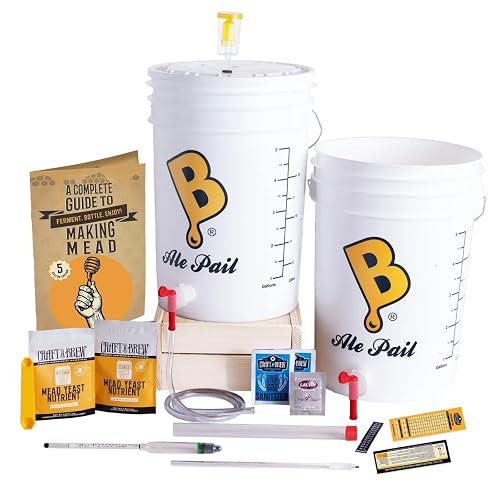
Craft A Brew 5 Gallon Mead Making Kit | Beginner Home Brewing Kit
Best for: Beginners who want to make mead or honey-based wine in five gallons.
This kit suits someone who wants a focused, honey-friendly starting point rather than a general-purpose setup.
Pros
- Sized for a five gallon batch
- Designed around a single fermentation style
Cons
- Less useful if you only plan to make grape wine
Ultimate Wine Making Equipment Starter Kit with 6 Gallon Glass Carboy

Ultimate Wine Making Equipment Starter Kit with 6 Gallon Glass Carboy
Best for: Winemakers who prefer glass for primary fermentation.
Good for hobbyists who want a sturdy, reusable vessel and don’t mind handling a heavier carboy.
Pros
- Glass carboy is easy to clean and inspect
- Generous headspace for active fermentation
Cons
- Glass is heavy and needs careful handling
Wild Grapes Wine Equipment Starter Kit, 6 Gallon Fermenter

For Making up to 30 Bottles of Wine, Specifically Designed For 6 US Gallon (23L) Wine Kits, No Airlock Or Drilling Required Wild Grapes Wine Equipment Starter Kit, 6 Gallon Fermenter
Best for: Beginners who want to avoid drilling a lid or fitting an airlock by hand.
Suited to first-timers who want a simpler setup with fewer modifications before the first batch.
Pros
- No airlock drilling required
- Sized for roughly 30 bottles
Cons
- Plastic fermenter needs regular inspection for scratches
Fontana Italian Pinot Grigio Wine Making Kit | Premium Wine Making Ingredients

Premium Wine Making Ingredients | Makes 30 Bottles of Wine Fontana Italian Pinot Grigio Wine Making Kit | 6 Gallon Wine Kit
Best for: Someone who wants a complete ingredient pack for a specific white wine.
A good match for a buyer who wants the juice and additives included so the first batch starts quickly.
Pros
- Ingredients included for a full batch
- Specific varietal target for easier expectations
Cons
- Locked to one wine style
Home Brew Ohio Upgraded 1 Gallon Wine from Fruit Kit

Home Brew Ohio Upgraded 1 Gallon Wine from Fruit Kit – Includes Mini Auto-Siphon
Best for: Trying a small test batch before committing to five gallons.
Useful for a first experiment with fruit wine, or for someone who wants to learn the process at low volume.
Pros
- Small volume lowers the stakes
- Includes a mini auto-siphon
Cons
- Not a five gallon setup
Wine Making Kit and Mead Making Kit | Complete Home Brewing Kit for Beginners and Experts

Wine Making Kit & Mead Making Kit | Complete Home Brewing Kit for Beginners & Experts – Includes Glass Carboy, Fermenter, Hydrometer, Siphon, Airlock & More | DIY Wine Brewing Equipment
Best for: An all-in-one beginner setup covering both wine and mead.
Fits a buyer who wants a broad set of tools, including a hydrometer and siphon, in one box.
Pros
- Covers wine and mead
- Includes hydrometer, siphon and airlock
Cons
- Accessory quality varies by owner reports
Gold Complete Beer Equipment Kit (K7) with 5 gal Glass Carboy

Gold Complete Beer Equipment Kit (K7) with 5 gal Glass Carboy
Best for: Home brewers who want shared gear for both beer and wine.
Works well for someone who already brews beer and wants a five gallon glass carboy for wine.
Pros
- Five gallon glass carboy
- Useful across beer and wine projects
Cons
- Built around beer, so wine beginners may need extra items
Buying Guide
Fermenter Size and Capacity
Make sure the vessel is genuinely sized for a five gallon batch, or at least understand how much finished wine it will yield. Some kits are built around a six gallon carboy, which leaves headspace for foaming during active fermentation, while others are sized for smaller batches. Match the capacity to how much wine you want to bottle.
Included Accessories
A complete starter kit should include an airlock, a siphon or racking tube, a hydrometer for measuring sugar and alcohol, and a sanitizer. Check the listing carefully, since some bundles include only the vessel and leave you to buy the rest. Extra items like a bottle filler or corker can save a separate trip later.
Glass Versus Plastic Fermenters
Glass carboys are durable, easy to clean, and do not scratch as readily, but they are heavy and fragile when full. Plastic fermenters are lighter and less likely to break, though they can hold onto odors and wear over time. Choose based on how you plan to move and store your equipment.
Ingredient Inclusions
Some kits come with wine concentrate or ingredient packs, while others are equipment-only. If you are new to winemaking, a kit with ingredients included removes guesswork on your first batch. Experienced makers may prefer equipment-only bundles so they can source their own fruit or juice.
Instructions and Support
Clear, step-by-step instructions make a big difference for first-timers. Look for kits that include printed or online guides covering sanitizing, fermentation timing, and bottling. Brands that respond to customer questions are also worth considering.
FAQ
Do I need any equipment beyond a starter kit to make wine?
Most starter kits cover the core equipment, but you will still need bottles, corks or caps, and a way to store finished wine. A large pot for sanitizing and a measuring tool for accurate additions are also helpful. Check which items the kit already includes before shopping for extras.
How long does it take to make wine from a kit?
Timing varies by recipe, but many kit-based wines take several weeks of fermentation followed by a period of clearing and aging. Patience is important, since rushing to bottle can lead to cloudy or unstable wine. Follow the timeline in your kit’s instructions closely.
Can I use a 5 gallon kit for mead or fruit wine?
Yes, many starter kits work for mead and fruit wines as well as grape-based wines. Mead and fruit recipes may require different ingredients and fermentation times, so review the instructions before starting. The same sanitizing and fermentation steps generally apply.
Is a glass carboy better than a plastic fermenter for beginners?
Glass carboys are favored by many hobbyists for their clarity and resistance to odors and scratches. Plastic fermenters are easier to handle and less likely to break during cleaning or moving. Either can produce excellent wine, so choose based on your space and comfort handling heavy containers.
How do I keep my equipment clean and sanitized?
Clean all equipment with warm water and a mild cleaner, then sanitize everything that will touch the wine. Rinse thoroughly after sanitizing to avoid off-flavors, and let items air dry. Consistent sanitizing is one of the most important habits for successful home winemaking.
Conclusion
If you want an all-in-one option with plenty of accessories for a first batch, a complete kit with a glass carboy and included instruments suits most beginners. Those focused on mead or who want a guided process may prefer a specialized bundle designed around that style of drink.
Smaller or budget-minded hobbyists who want to test the process before committing to full-size batches can start with a one gallon kit, while those ready for larger yields should pick a five or six gallon setup with the full set of tools included.
Related reading
- Winemakers Depot 3 Gallon Glass Wine Making Equipment Kit (2026): Pros, Cons & Verdict
- Wine Making Starter Kit UK: A Step-by-Step Guide for Beginners
- Wine Making Starter Kit Canada: A Step-by-Step Guide for Beginners
- Vintners Harvest Wine Making Starter Kit: A Step-by-Step Guide for Beginners
About Caleb Morgan
Caleb Morgan is part of our editorial team and reviews and edits our home brewing guides, checking product details against manufacturer specifications and owner feedback.