 By Caleb Morgan
Updated November 2026
Homebrewers looking at a mangrove jacks 30l plastic fermenter usually want one thing: a large, easy-to-clean vessel that handles a full batch without fuss. Since the listings and owner feedback for this size vary a lot, this roundup compares seven options on capacity, lid design, airlock setup and how practical each one is for a 5-gallon-plus brew. Each pick is matched to a specific need.
Our top picks at a glance
- 1
 TOP CHOICEBest overallSpeidel Plastic Fermenter 20LView on Amazon
- 2
 TOP CHOICEBest for pressure fermentingFermZilla All Rounder Easy-Grip Pressure Fermenter Starter Kit 30LView on Amazon
- 3
 TOP CHOICEBest for a stainless alternativeVEVORfor Wine and Beer Brewing, All-in-One Design Supports Secondary FView on Amazon
- 4
 Best budget compact pickSpeidel FE705 Plastic Fermenter 12LView on Amazon
- 5
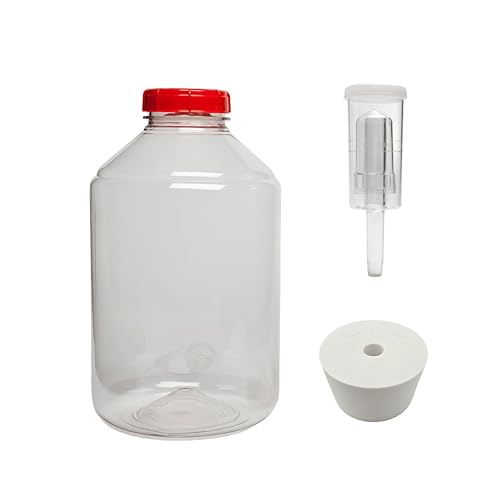 Best for small trial batchesFastRack 3 Gallon PET Wide Mouth Fermonster with Airtight LidView on Amazon
- 6
 Best for single-gallon test brewsFastRack 1 Gallon (PET) Wide Mouth Fermonster Carboy with Airtight LidView on Amazon
- 7
 Best for a full 6.5-gallon batchwith Twin Bubble Airlock Grommets Lid Brewing, Wine Fermenter FermentaView on Amazon
Our Top Picks
| Product | Best for | Key feature |
|---|---|---|
| Speidel Plastic Fermenter 20L | Overall use | Large capacity, simple lid |
| FermZilla All Rounder 30L Kit | Pressure fermenting | Easy-grip pressure lid |
| VEVOR Pressure Fermenter 30L | Stainless alternative | Stainless steel conical body |
| Speidel FE705 Plastic Fermenter 12L | Budget compact pick | Lightweight, easy to handle |
| FastRack 3 Gallon Fermonster | Small trial batches | Wide mouth, twin bubble airlock |
| FastRack 1 Gallon Fermonster | Single-gallon test brews | Clear PET carboy |
| 6.5 Gallon Fermentation Bucket Kit | Full 6.5-gallon batch | Grommeted lid with airlock |
Speidel Plastic Fermenter 20L
Speidel Plastic Fermenter – 20L (5.3 gal)
Best for: Overall use in a standard 5-gallon-plus brew setup.
This suits homebrewers who want a straightforward plastic vessel with enough headspace for a full batch. Owners often report that the wide opening makes dry hopping and cleaning manageable.
Pros
- Generous capacity for full batches
- Simple, familiar lid and airlock setup
Cons
- Plastic shows wear over repeated cleanings
FermZilla All Rounder Easy-Grip Pressure Fermenter Starter Kit 30L
FermZilla All Rounder Easy-Grip Pressure Fermenter Starter Kit – 30L
Best for: Pressure fermenting and controlled carbonation.
This fits brewers who plan to ferment under light pressure or want a sealed system for lager-style or pressurized work. Manufacturers specify a pressure-rated lid, so check the rating before use.
Pros
- Easy-grip lid makes sealing and opening simpler
- Complete starter kit with 30L capacity
Cons
- Pressure use requires attention to the rated limits
VEVOR Pressure Fermenter 15 PSI, 8 Gal/30L All-in-One Stainless Steel Conical Secondary Fermentation Bucket
VEVORfor Wine and Beer Brewing, All-in-One Design Supports Secondary Fermentation and Convenient Home Batch Preparation Tasks Pressure Fermenter 15 PSI, 8 Gallon Stainless Steel Conical Bucket
Best for: A stainless alternative to plastic at the same 30-liter size.
This is for brewers who want a sturdier, easier-to-sanitize vessel and don’t mind a heavier build. Listings specify a 15 PSI rating and a conical shape for sediment separation.
Pros
- Stainless body resists scratches and staining
- Conical shape helps separate trub
Cons
- Heavier to lift when full
Speidel FE705 Plastic Fermenter 12L
Speidel-FE705 Plastic Fermenter – 12L (3.2 gal)
Best for: A smaller, lighter budget pick for partial batches.
This suits brewers who mostly make 3-gallon batches or want a compact vessel for a second fermentation. Owners often describe it as easy to move between the counter and a closet.
Pros
- Light and easy to carry
- Fits small spaces
Cons
- Too small for a full 5-gallon batch
FastRack 3 Gallon PET Wide Mouth Fermonster with Airtight Lid
FastRack 3 Gallon PET Wide Mouth Fermonster with Airtight Lid, #10 Drilled Stopper & Twin Bubble Airlock | BPA-Free, Food-Grade | Large Primary Fermenter for Home Brewing, Wine & Beer – 1 Pack
Best for: Small trial batches and recipe testing.
This fits brewers experimenting with new recipes before committing to a full batch. The PET construction is listed as BPA-free and food-grade.
Pros
- Clear body lets you watch fermentation
- Includes a drilled stopper and twin bubble airlock
Cons
- Capacity is well short of 30 liters
Buying Guide
Capacity and Batch Size
Check the listed capacity against the batch you plan to brew. A true 30L vessel leaves little headspace for a vigorous fermentation, so many brewers prefer to fill to about 5 gallons of wort and keep some room for krausen. If you regularly brew larger batches, look for a vessel with extra headroom rather than one sized exactly to your volume.
Lid Design and Sealing
A wide, airtight lid makes it easier to add ingredients and clean the interior, while a good seal keeps contaminants out. Confirm whether the lid includes a drilled stopper or grommets for an airlock, since some kits require you to supply these yourself. Lids that clamp or screw down tend to hold a tighter seal than those that simply press on.
Airlock and Pressure Compatibility
Decide whether you want a standard airlock setup for ordinary fermenting or a pressure-rated vessel for closed fermentation. Pressure fermenters usually come with pressure gauges, relief valves and sturdier lids, and they cost more. If you only brew with a basic airlock, a simpler plastic fermenter will usually be enough.
Material and Ease of Cleaning
Plastic fermenters are lightweight and affordable, but scratches can harbor bacteria, so look for smooth, food-grade construction. Stainless steel is more durable and easier to sanitize over time, though it is heavier and pricier. Wide openings and smooth interior walls make cleaning and sanitizing much quicker after every brew.
FAQ
Can I ferment a full 5-gallon batch in a 30L fermenter?
Yes, a 30L vessel can hold a standard 5-gallon batch with room for active fermentation. Leaving some headspace is important so foam and krausen do not spill out through the airlock. Filling to the recommended level in the manufacturer’s instructions is the safest approach.
Do I need a pressure fermenter for home brewing?
No, most home brewers succeed with a standard plastic fermenter and a basic airlock. Pressure fermenters are useful if you want to carbonate or control fermentation more precisely. Choose one based on how advanced your brewing process is.
How do I clean a plastic fermenter without scratching it?
Use a non-abrasive sponge or soft brush with a no-rinse sanitizer or a mild cleaner, and avoid harsh scouring pads. Rinse thoroughly after cleaning and let the vessel air dry before storing. Replace the vessel if deep scratches develop, since they can trap residue.
Is a wide mouth opening better than a narrow one?
A wide mouth makes it easier to add ingredients, clean the interior and fit a hand or brush inside. Narrow openings can be harder to work with, especially for larger batches. The trade-off is that wide lids may need a more secure seal, so check that the lid fits snugly.
Conclusion
If you want a straightforward, budget-friendly vessel for standard batches, a plastic fermenter with a wide mouth and simple airlock setup will serve you well. Brewers who want to experiment with pressure fermenting should consider a kit with a gauge and sturdier lid, while those who value long-term durability may prefer stainless steel.
Smaller fermenters, such as the one-gallon and three-gallon options, suit test batches, mead and specialty brews, whereas the 30L and 20L-class vessels are better for full 5-gallon runs. Match the vessel to your typical batch size and your comfort level with pressure, and you will find the right fit.
Related reading
- Speidel Plastic Fermenter 12L: Setup, Use and Cleaning Steps for Homebrewers
- Plastic vs Glass Fermenter: Which Is Better for Your Brews?
- Plastic Fermenter vs Glass Carboy: Which Should You Choose?
- Plastic Conical Fermenter UK: A Step-by-Step Guide for Homebrewers
- Plastic Conical Fermenter Diy: A Practical Guide (2026)
- How to Clean Plastic Fermenter Fast: A Step-by-Step Guide for Homebrewers
About Caleb Morgan
Caleb Morgan is part of our editorial team and reviews and edits our home brewing guides, checking product details against manufacturer specifications and owner feedback.


