 By Caleb Morgan
Updated November 2026
Choosing a plastic fermenter for wine comes down to batch size, how much headspace you need, whether you want a spigot, and how easily the lid seals. This list compares six options that home winemakers and homebrewers commonly consider. Each pick was assessed against specifications, brand reputation, and patterns seen in owner feedback, with attention to food-grade plastic, lid fit, volume, and how well each one suits a wine must that foams during the first few days. We did not test these products ourselves; the notes below reflect published specifications and commonly reported experiences.
Our top picks at a glance
- 1
 TOP CHOICEBest overallSpeidel Plastic Fermenter 20L (5.3 gal)View on Amazon
- 2
 TOP CHOICEBest for small batchesFastRack 1 Gallon (PET) Wide Mouth Fermonster CarboyView on Amazon
- 3
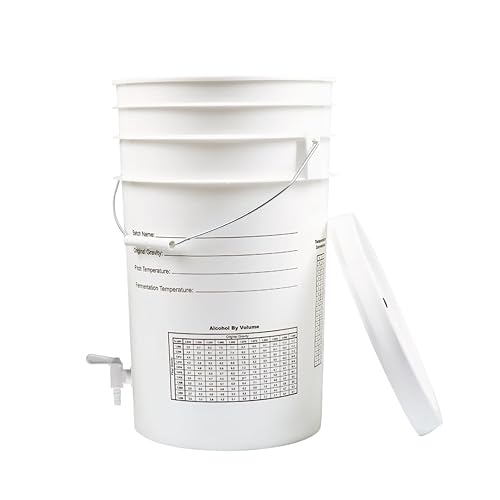 TOP CHOICEBest for spigot rackingFastTrack Fermentation Bucket with SpigotView on Amazon
- 4
 Best budget pick2 Gallon Fermentation Bucket with Twin Bubble Airlock GrommetsView on Amazon
- 5
 Best for visual monitoringPET Plastic 6 Gal CarboyView on Amazon
- 6
 Best for mid-size batchesSpeidel-FE705 Plastic Fermenter 12L (3.2 gal)View on Amazon
Our Top Picks
Quick Comparison
| Product | Best for | Key feature |
|---|---|---|
| Speidel Plastic Fermenter 20L (5.3 gal) | Larger wine batches | Roughly 5.3 gallon capacity with headspace for active fermentation |
| FastRack 1 Gallon (PET) Wide Mouth Fermonster Carboy | Small-batch trials | Wide mouth with airtight lid and drilled stopper |
| FastTrack Fermentation Bucket with Spigot | Racking without siphoning | Built-in spigot for transfers |
| 2 Gallon Fermentation Bucket with Twin Bubble Airlock Grommets | Budget starter setups | Twin airlock grommets in the lid |
| PET Plastic 6 Gal Carboy | Visual monitoring | Clear PET body shows fermentation progress |
| Speidel-FE705 Plastic Fermenter 12L (3.2 gal) | Mid-size batches | Sized for roughly 3 gallon batches |
Speidel Plastic Fermenter 20L (5.3 gal)
Speidel Plastic Fermenter – 20L (5.3 gal)
Best for: Larger wine batches that need headspace during vigorous primary fermentation.
This fits winemakers who regularly make five-gallon-plus batches of fruit or grape wine and want a dedicated primary with room for foam.
Key specs
- Capacity: 20 liters (5.3 gallons)
- Food-grade plastic body
- Designed for use as a primary fermenter
Pros
- Enough volume for a full five-gallon wine batch with headspace
- Widely referenced by home winemakers as a standard primary option
- Simple, easy-to-clean design
Cons
- Heavy when full, so plan your transfer method carefully
- Not a spigot model, so racking requires a siphon
Bottom line: A strong choice for winemakers who want one reliable primary for full-size batches.
FastRack 1 Gallon (PET) Wide Mouth Fermonster Carboy
FastRack 1 Gallon (PET) Wide Mouth Fermonster Carboy with Airtight Lid | Includes #10 Drilled Stopper & Twin Bubble Airlock | Clear Plastic Fermenter for Wine, Beer & Mead
Best for: Small-batch wine trials and test recipes.
Suited to winemakers experimenting with new fruit or juice recipes before scaling up, or those with limited storage space.
Key specs
- Capacity: 1 gallon
- PET plastic, clear body
- Wide mouth with airtight lid
- Includes #10 drilled stopper and twin bubble airlock
Pros
- Clear body makes fermentation easy to monitor
- Wide mouth simplifies adding fruit and cleaning
- Included stopper and airlock mean fewer extra parts
Cons
- Too small for standard five-gallon batches
- Clear plastic can allow light exposure, so store it away from sunlight
Bottom line: Best for trying a recipe on a small scale before committing to a full batch.
FastTrack Fermentation Bucket with Spigot
FastTrack Fermentation Bucket with Spigot | Home Brewing Wine Fermenter with Spigot | 100% Food Grade-BPA Free Fermenting Bucket for your Beer, Wine, Mead, Cider, or any other Fermented Beverage
Best for: Racking wine without siphoning and reducing sediment disturbance.
This is a practical choice for winemakers who want a spigot to draw off clear wine above the lees.
Key specs
- Built-in spigot near the base
- Food-grade, BPA-free plastic
- Designed for wine, beer, mead, and cider
Pros
- Spigot eliminates the need for a siphon start
- Good for drawing samples during aging
- Bucket shape gives generous surface area for fermentation
Cons
- Spigots can leak if not tightened or cleaned properly
- Opaque bucket makes monitoring the wine harder
Bottom line: A good fit for winemakers who prioritize easy racking and sampling.
2 Gallon Fermentation Bucket with Twin Bubble Airlock Grommets
with Twin Bubble Airlock Grommets Lid Brewing, Wine Fermenter Fermentation Kit, Home Beer Wine Mead Other Fermented Beverage 4 Pcs White 2 Gallon Fermentation Bucket for Fermented Beverage
Best for: Budget starter setups and small test batches.
Works for beginners who want to learn primary fermentation without investing in a large vessel.
Key specs
- Capacity: 2 gallons
- Lid with twin bubble airlock grommets
- Food-grade plastic bucket
Pros
- Twin grommets allow an airlock plus a secondary port
- Compact footprint for small spaces
- Good starter size for learning the process
Cons
- Too small for full five-gallon wine batches
- Lid seal quality can vary, so check it before use
Bottom line: Ideal for beginners or anyone testing small quantities before a bigger investment.
PET Plastic 6 Gal Carboy
PET Plastic 6 Gal Carboy | Wine Carboy 6 Gallon Shatter resistant & BPA Free for beer, wine, cider, home brewing & storage PET Plastic Fermenter | 6 Gallon Carboy for Beer, Wine and Cider | 1 Pack
Best for: Watching fermentation and clearing progress through the vessel walls.
Good for winemakers who like to see sediment drop and the wine clear over several weeks.
Key specs
- Capacity: 6 gallons
- PET plastic, shatter resistant
- BPA-free construction as listed
Pros
- Clear walls let you monitor airlock activity and clearing
- Lighter and less fragile than glass
- Six-gallon volume suits standard batch sizes with headspace
Cons
- Plastic can scratch over time, which may cloud visibility
- Requires a separate stopper and airlock
Bottom line: A solid pick for winemakers who value visibility and a lighter vessel.
Speidel-FE705 Plastic Fermenter 12L (3.2 gal)
Speidel-FE705 Plastic Fermenter – 12L (3.2 gal)
Best for: Mid-size batches and partial wine batches.
Fits winemakers making three-gallon batches or splitting a larger recipe into smaller test lots.
Key specs
- Capacity: 12 liters (3.2 gallons)
- Food-grade plastic fermenter
- Same brand line as the 20L model
Pros
- Manageable weight when full compared with larger vessels
- Good middle ground between small and full batches
- Shares the familiar Speidel design
Cons
- Not large enough for full five-gallon wine batches
- No spigot, so racking requires a siphon
Bottom line: A useful middle size for winemakers who brew in partial batches.
Buying Guide
Capacity and headspace
Wine that is actively fermenting produces foam, and the fermenter needs room above the must. A common guideline is to leave roughly 20 to 25 percent of the vessel empty for a standard fruit or grape wine batch. For a five-gallon recipe, that points toward a vessel of six gallons or larger. Smaller vessels are fine for trials but will overflow if you fill them to the top.
Good picks for this: Speidel Plastic Fermenter 20L (5.3 gal), PET Plastic 6 Gal Carboy
Lid and seal quality
The lid determines how well your wine is protected from oxygen and contamination. Look for a lid that seats firmly, accepts a drilled stopper or grommet for an airlock, and fits the vessel without gaps. Check the seal before every batch, especially if the lid has been stored for months.
Good picks for this: FastRack 1 Gallon (PET) Wide Mouth Fermonster Carboy, 2 Gallon Fermentation Bucket with Twin Bubble Airlock Grommets
Spigot or siphon racking
A spigot lets you draw wine off the bottom without disturbing sediment, while a siphon works with any vessel but requires a clean start. If you plan to rack several times during the wine’s life, a spigot saves effort. If you only rack once or twice, a siphon-compatible vessel is usually enough.
Good picks for this: FastTrack Fermentation Bucket with Spigot, Speidel-FE705 Plastic Fermenter 12L (3.2 gal)
Visibility of the wine
Clear walls let you watch airlock activity, sediment formation, and clearing. Opaque buckets hide this, so you rely on the airlock and hydrometer readings. Visibility is especially helpful when you want to judge when the wine is clear enough to rack.
Good picks for this: PET Plastic 6 Gal Carboy, FastRack 1 Gallon (PET) Wide Mouth Fermonster Carboy
Weight and handling
A full five-gallon batch weighs over 40 pounds, so consider how you will lift and move the vessel. Lighter plastic vessels are easier to handle than glass, but a full bucket can still be awkward. Plan a stable surface at a comfortable height for racking.
Good picks for this: PET Plastic 6 Gal Carboy, Speidel-FE705 Plastic Fermenter 12L (3.2 gal)
Durability and food-grade materials
Look for food-grade, BPA-free plastic and avoid scratched or cracked vessels, since scratches can harbor bacteria. Clear PET is durable but can scratch over years of cleaning. Replace any vessel with deep scratches or cracks.
Good picks for this: Speidel Plastic Fermenter 20L (5.3 gal), FastTrack Fermentation Bucket with Spigot
Cleaning and care
Rinse the vessel immediately after use, then clean with a no-rinse sanitizer before each batch. Pay attention to the lid, grommets, and spigot, where residue collects. Store the vessel with the lid loosely placed to prevent odors.
Good picks for this: FastTrack Fermentation Bucket with Spigot, 2 Gallon Fermentation Bucket with Twin Bubble Airlock Grommets
FAQ
Can I use a plastic fermenter for wine?
Yes. Food-grade plastic fermenters are widely used for primary fermentation of wine. Make sure the plastic is labeled food-safe and that the vessel is cleaned and sanitized before use.
What size fermenter do I need for a five-gallon batch?
A vessel of at least six gallons is typically recommended for a five-gallon batch so there is room for foam during active fermentation.
Is a bucket or a carboy better for wine?
Buckets offer a wide surface and easy access, while carboys offer a narrow neck and better visibility. Both work well. Choose based on your batch size and whether you want to see the wine clearing.
How long should wine stay in the primary fermenter?
Many winemakers leave wine in primary for one to two weeks, until the bubbling in the airlock slows significantly. Exact timing depends on the recipe, temperature, and yeast. Check your recipe and use a hydrometer to confirm fermentation is complete.
Do I need an airlock?
An airlock lets CO2 escape while keeping air out. It is strongly recommended for both primary and secondary fermentation to reduce oxidation and contamination.
How do I clean a plastic fermenter after use?
Rinse out residue promptly, wash with warm water and a mild cleaner, then sanitize with a product made for brewing and winemaking. Allow the vessel to air dry before storing.
Can plastic fermenters be used for long-term aging?
Plastic is generally better suited to primary fermentation and short holding periods. For long aging, many winemakers move wine to glass or to vessels with minimal oxygen exposure.
Conclusion
For most home winemakers, the Speidel Plastic Fermenter 20L (5.3 gal) is a dependable primary for full five-gallon batches, while the PET Plastic 6 Gal Carboy suits those who want to watch clearing. The FastTrack Fermentation Bucket with Spigot is a good match for frequent racking, and the FastRack 1 Gallon (PET) Wide Mouth Fermonster Carboy and 2 Gallon Fermentation Bucket with Twin Bubble Airlock Grommets work well for small experiments. The Speidel-FE705 Plastic Fermenter 12L (3.2 gal) sits in the middle for partial batches. Match the vessel to your batch size first, then weigh spigot versus siphon and visibility versus handling.
Once you have a fermenter, read more on Primary Fermenter for Wine Making: A Step-by-Step Guide for Beginners and Plastic vs Glass Fermenter: Which Is Better for Your Brews? to plan your process. For cleaning routines, see How to Clean Plastic Fermenter Fast: A Step-by-Step Guide for Homebrewers, and if you want a size comparison, Top 7 Primary Fermenters for Wine Options Compared for Home Winemakers covers more options.
Sources
- Federal guidance on food-contact materials and safe use of plastics (fda.gov)
- Food safety basics and sanitation principles relevant to home fermentation (cdc.gov)
- Home food preservation and fermentation safety resources (usda.gov)
Related reading
About Caleb Morgan
Caleb Morgan is part of our editorial team and reviews and edits our home brewing guides, checking product details against manufacturer specifications and owner feedback.


