 By Caleb Morgan
Updated November 2026
Shopping for an anvil 7.5 gallon fermenter means choosing between a fairly specific category: a 7.5 gallon capacity that fits a standard five-gallon batch with headspace, a fermenter you can clean and handle by yourself, and a build that holds up to repeated sanitizing. This guide compares six options against those criteria. We looked at manufacturer specifications, brand reputation among homebrewers and the patterns that show up in owner feedback, including common complaints about lids, spigots and seals. Nothing here is based on our own testing, so check the listing details before you buy.
Our top picks at a glance
- 1
 TOP CHOICEBest overallSpeidel Plastic Fermenter – 20L (5.3 gal)View on Amazon
- 2
 TOP CHOICEBest for small kitchensSpeidel FE705 Plastic Fermenter – 12L (3.2 gal)View on Amazon
- 3
 TOP CHOICEBest for tight storageNorth Mountain Supply Square Compact Fermenter with 2-Piece Airlock – 25 LiterView on Amazon
- 4
 Best for pressure fermentationVEVOR 16 Gallon Stainless Steel Conical BucketView on Amazon
- 5
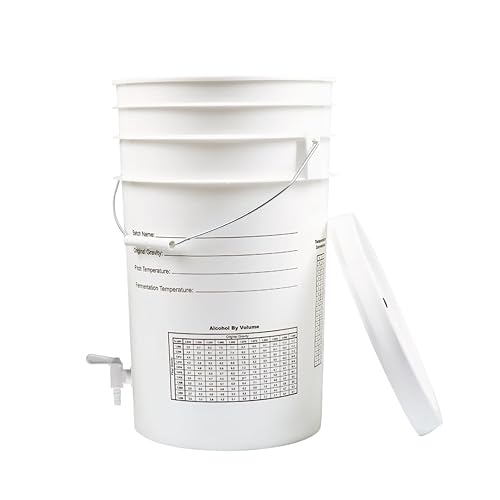 Best budget pickFastTrack Fermentation Bucket with SpigotView on Amazon
- 6
 Best for conical fermentationFermZilla Tri-Conical Easy-Grip Pressure Fermenter Starter Kit – 27LView on Amazon
Our Top Picks
Quick Comparison
| Product | Best for | Key feature |
|---|---|---|
| Speidel Plastic Fermenter – 20L (5.3 gal) | Overall balance of capacity and handling | Plastic body with a large opening |
| Speidel FE705 Plastic Fermenter – 12L (3.2 gal) | Small kitchens | Compact footprint |
| North Mountain Supply Square Compact Fermenter with 2-Piece Airlock – 25 Liter | Tight storage | Square shape that stacks easily |
| VEVOR 16 Gallon Stainless Steel Conical Bucket | Pressure fermentation | Stainless conical body with pressure rating |
| FastTrack Fermentation Bucket with Spigot | Budget setups | Built-in spigot for easy transfer |
| FermZilla Tri-Conical Easy-Grip Pressure Fermenter Starter Kit – 27L | Conical fermentation and yeast harvesting | Tri-conical shape with easy-grip handles |
Speidel Plastic Fermenter – 20L (5.3 gal)
Speidel Plastic Fermenter – 20L (5.3 gal)
Best for: Overall balance of capacity and handling
This is a good fit for brewers who want a plain, dependable plastic fermenter that holds a full five-gallon batch with room for krausen. It suits people who already have a brewing routine and want a straightforward vessel that is easy to lift, clean and move between shelves.
Key specs
- Nominal capacity of 20 liters (about 5.3 gallons), per the listing name
- Plastic food-grade fermenter body
Pros
- Capacity is well suited to five-gallon batches with headspace
- Lightweight compared with stainless options
- Wide opening simplifies cleaning and adding ingredients
Cons
- Plastic can show scratches over time, which can harbor residue if not cleaned well
- Owners often mention that it takes up more floor or shelf space than compact designs
Bottom line: A sensible default for homebrewers who want a no-nonsense plastic fermenter sized for five-gallon batches.
Speidel FE705 Plastic Fermenter – 12L (3.2 gal)
Speidel-FE705 Plastic Fermenter – 12L (3.2 gal)
Best for: Small kitchens
This smaller fermenter is aimed at brewers with limited counter or closet space, or those who brew smaller batches and want less volume to clean. It is a practical choice when a full-size vessel would not fit the space you have.
Key specs
- Nominal capacity of 12 liters (about 3.2 gallons), per the listing name
- Plastic food-grade fermenter body
Pros
- Compact footprint for small spaces
- Lighter to move when full of wort
- Good for smaller test batches or specialty recipes
Cons
- Capacity is too small for a standard five-gallon batch
- Owners often note that it is best reserved as a secondary vessel rather than a main fermenter
Bottom line: Pick this if space is the main constraint and you rarely brew full five-gallon batches.
North Mountain Supply Square Compact Fermenter with 2-Piece Airlock – 25 Liter
North Mountain Supply Square Compact Fermenter with 2-Piece Airlock – 25 Liter (Approximately 6.5 Gallons) – Designed to be Stored in Tight Spaces – Made in Italy!
Best for: Tight storage
A square-profile fermenter is useful when you want to fit a vessel into a cabinet, a corner or a row of carboys without wasting space. This option is for brewers who prioritize how the fermenter stores and who want an airlock included from the start.
Key specs
- Listed capacity of 25 liters (approximately 6.5 gallons)
- Includes a 2-piece airlock, per the listing name
- Listing states it is made in Italy
Pros
- Square shape makes efficient use of shelf and floor space
- Airlock is included, so it is ready to use out of the box
- Headspace is generous for a five-gallon batch
Cons
- Square corners can be harder to scrub than rounded designs
- Owners sometimes report that the lid seal needs careful positioning to stay airtight
Bottom line: A strong choice for apartment brewers or anyone who needs a fermenter that stores neatly between brew days.
VEVOR 16 Gallon Stainless Steel Conical Bucket
for Wine and Beer Brewing, All-in-One Design Supports Secondary Fermentation and Convenient Home Batch Preparation Tasks VEVOR Pressure Fermenter 15 PSI, 16 Gallon Stainless Steel Conical Bucket
Best for: Pressure fermentation
This is a larger stainless conical unit that suits brewers who want pressure capability and a vessel that can handle more than a basic bucket. It is better suited to people already comfortable with pressure fermentation and who will use the full range of features.
Key specs
- 16 gallon listed capacity, per the listing name
- Stainless steel conical body
- Listing references a 15 PSI pressure rating
Pros
- Stainless construction resists scratches and staining
- Conical bottom helps yeast and trub collect for easier removal
- Pressure rating supports secondary and pressurized work
Cons
- Capacity is well above 7.5 gallons, so it is oversized for a standard five-gallon batch
- Heavier and bulkier than plastic options, which owners often mention when moving it
Bottom line: Best for experienced brewers who want pressure capability and have the space and strength to handle a large stainless vessel.
FastTrack Fermentation Bucket with Spigot
FastTrack Fermentation Bucket with Spigot | Home Brewing Wine Fermenter with Spigot | 100% Food Grade-BPA Free Fermenting Bucket for your Beer, Wine, Mead, Cider, or any other Fermented Beverage
Best for: Budget setups
This bucket-style fermenter with a spigot is aimed at beginners and budget-conscious brewers who want easy bottling transfer without buying a conical. It fits the flea-market style of building a functional setup from simple parts.
Key specs
- Built-in spigot for draining
- Marketed as food grade and BPA free
- Suitable for beer, wine, mead, cider and similar beverages, per the listing name
Pros
- Spigot makes transferring to bottling buckets simple
- Straightforward design with few parts to manage
- Approachable entry point for new brewers
Cons
- Spigots can drip or leak if not tightened and sanitized carefully, a common owner complaint
- Plastic bucket surfaces scratch more easily than stainless
Bottom line: A practical budget pick for new homebrewers who want a spigot and a simple, familiar bucket format.
FermZilla Tri-Conical Easy-Grip Pressure Fermenter Starter Kit – 27L
FermZilla Tri-Conical Easy-Grip Pressure Fermenter Starter Kit – 27L
Best for: Conical fermentation and yeast harvesting
This tri-conical kit is for brewers who want to move beyond buckets and carboys toward a conical workflow, including yeast harvesting and cleaner trub removal. It suits people willing to learn a slightly more involved setup.
Key specs
- 27 liter listed capacity, per the listing name
- Tri-conical design with easy-grip handles
- Sold as a starter kit, per the listing name
Pros
- Tri-conical shape helps separate trub and spent yeast from clear beer
- Easy-grip handles make lifting a full vessel more manageable
- Kit format covers the basics in one purchase
Cons
- Conical workflows add steps such as dump valves and cleaning that beginners may find fiddly
- Owners often mention that accessories and fittings need careful sanitizing and checking for leaks
Bottom line: Choose this if you are ready for conical fermentation and want a kit that covers the basic hardware.
Buying Guide
Capacity and headspace
A five-gallon batch of beer typically needs a fermenter with at least 1 to 2 gallons of headspace to handle active krausen. A 7.5 gallon vessel gives that margin. Smaller units can work for partial batches, but they are not a substitute for a full-size fermenter. Check the listed capacity in liters or gallons and compare it with your batch size before buying.
Good picks for this: Speidel Plastic Fermenter – 20L (5.3 gal), North Mountain Supply Square Compact Fermenter with 2-Piece Airlock – 25 Liter
Material: plastic versus stainless
Plastic fermenters are lighter and less expensive to replace, but they scratch over time and can hold onto residue in worn spots. Stainless steel resists scratches and staining and tolerates aggressive cleaning, though it is heavier. Your choice depends on how often you brew and how carefully you want to handle your gear.
Good picks for this: VEVOR 16 Gallon Stainless Steel Conical Bucket, Speidel FE705 Plastic Fermenter – 12L (3.2 gal)
Lid, seal and airlock fit
Most fermentation problems that owners report trace back to lids and seals. Look for a lid that seats evenly, a gasket that is not cracked, and a grommet that fits your airlock snugly. Check that the airlock fits the lid opening before you brew, and run a sanitizer solution through the seal to confirm it holds.
Good picks for this: North Mountain Supply Square Compact Fermenter with 2-Piece Airlock – 25 Liter, FastTrack Fermentation Bucket with Spigot
Spigot and transfer method
A spigot makes it easy to move beer into a bottling bucket without disturbing sediment, but it adds a potential leak point. If you choose a spigot model, tighten it firmly, sanitize it thoroughly and check for drips before each batch. A conical with a dump valve is an alternative for sediment removal.
Good picks for this: FastTrack Fermentation Bucket with Spigot, FermZilla Tri-Conical Easy-Grip Pressure Fermenter Starter Kit – 27L
Shape and storage footprint
Round buckets are easy to clean and widely available, while square or compact designs save shelf and floor space. Measure the spot where the fermenter will sit, including clearance for an airlock and room to lift the vessel out. A fermenter that does not fit your storage will get moved around more than it should.
Good picks for this: North Mountain Supply Square Compact Fermenter with 2-Piece Airlock – 25 Liter, Speidel FE705 Plastic Fermenter – 12L (3.2 gal)
Pressure rating and fermentation style
If you plan to ferment under pressure or carbonate in the vessel, check the manufacturer’s pressure rating and whether it is designed for that use. Plain buckets are not built for pressure. Pressure fermentation adds fittings and monitoring, so only choose a pressure-rated vessel if you intend to use those features.
Good picks for this: VEVOR 16 Gallon Stainless Steel Conical Bucket, FermZilla Tri-Conical Easy-Grip Pressure Fermenter Starter Kit – 27L
Cleaning and long-term care
Plastic fermenters should be cleaned promptly and inspected for scratches where bacteria can hide. Stainless should be checked for scuffs and kept dry to avoid spotting. In both cases, use a no-rinse sanitizer, store lids separately and replace gaskets when they show wear. Keep the fermenter out of direct sunlight to slow plastic degradation.
Good picks for this: Speidel Plastic Fermenter – 20L (5.3 gal), VEVOR 16 Gallon Stainless Steel Conical Bucket
FAQ
Is a 7.5 gallon fermenter big enough for a five-gallon batch?
Yes. A 7.5 gallon fermenter gives roughly 2.5 gallons of headspace above a five-gallon batch, which is enough for vigorous primary fermentation. Keep the fill line in mind, since filling to the brim invites blow-off.
Can I use a plastic fermenter for lagers?
Yes, but the fermenter’s material does not control temperature. For lagers, the bigger factor is keeping the vessel in a stable cool environment. Plastic and stainless both work when temperature is managed well.
How often should I replace the lid gasket?
Replace it when you see cracks, stiffness or permanent deformation, or if it no longer seals during a sanitizer test. Many owners treat gaskets as a regular replacement item rather than a lifetime part.
Do I need an airlock with every fermenter?
An airlock lets CO2 escape while keeping oxygen and contaminants out. Most ales and lagers benefit from one during primary fermentation. Some brewers use a blow-off tube initially, then switch to an airlock once activity slows.
Is stainless worth the extra handling weight?
For brewers who clean carefully and want a long-lasting vessel, stainless is often preferred. For those who move the fermenter often or have limited strength, a lighter plastic option is usually more practical.
How should I clean a bucket fermenter?
Rinse out trub promptly, wash with a non-scented cleaner, rinse thoroughly and sanitize just before use. Pay attention to the lid, gasket and spigot. Never use abrasive pads on plastic, since they scratch the surface.
Conclusion
For most homebrewers looking for an anvil 7.5 gallon fermenter, the choice comes down to space, material and fermentation style. The Speidel 20L is a sensible general-purpose plastic option for five-gallon batches. The North Mountain Supply Square Compact Fermenter suits tight storage. The VEVOR stainless conical fits brewers who want pressure capability and have the room. The FastTrack bucket with spigot works for budget-minded beginners, and the FermZilla kit suits those moving toward conical fermentation. Compare capacity, material and your storage space before deciding, and check the current listing details for dimensions and features.
Sources
- Food contact materials guidance, including which plastics and metals are suitable for food and beverage use (fda.gov)
- Food safety basics for sanitation and handling of food-contact equipment (usda.gov)
- Workplace guidance on safe lifting and handling of heavy containers (osha.gov)
Related reading
- Anvil Bucket Fermenter 7.5 Gallon: Setup, Brew Day Steps and Tips
- Anvil 4 Gallon Fermenter: A Step-by-Step Guide for Beginners
- 6 Best Anvil 7.5 Gallon Stainless Bucket Fermenters (2026): Our Picks
- SS BrewTech Fermenter 7 Gallon: Setup, Brew Day Steps and Tips
About Caleb Morgan
Caleb Morgan is part of our editorial team and reviews and edits our home brewing guides, checking product details against manufacturer specifications and owner feedback.


