 By Graham Fisher
Updated November 2026
Tannins in beer brewing shape mouthfeel, astringency and long-term stability, and home brewers who want more control over them usually reach for a dedicated tannin additive. This list compares five products that brewers and winemakers commonly use to add or understand tannin, selected by form (powder, bulk or jar), intended use, ease of dosing, and the quality of the information provided. Each pick is matched to a specific need so you can choose what fits your batch size and goals.
Our top picks at a glance
- 1
 TOP CHOICEBest overallWine Tannin Powder, 2oz, Winemaking AdditiveView on Amazon
- 2
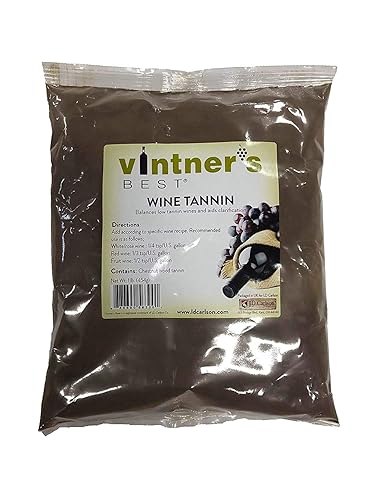 TOP CHOICEBest for bulk useWine Tannin – 1 lb.View on Amazon
- 3
 TOP CHOICEBest budget pickWine Tannin – 1 oz.View on Amazon
- 4
 Best for kits with acid blendNorth Mountain Supply WT-2oz and AB-4oz Wine Tannin and Acid BlendView on Amazon
- 5
 Best for learning the theoryTannin and Time: A Technical Guide for Barrel MaturationView on Amazon
Our Top Picks
Quick Comparison
| Product | Best for | Key feature |
|---|---|---|
| Wine Tannin Powder, 2oz | Small batches and fine adjustments | Powdered tannin for astringency control |
| Wine Tannin 1 lb. | Frequent brewers and larger batches | Bulk supply for repeated dosing |
| Wine Tannin 1 oz. | Occasional brewers testing a small addition | Minimal commitment size |
| North Mountain Supply WT-2oz and AB-4oz | Brewers who also need acidity adjustment | Tannin and acid blend in one order |
| Tannin and Time: A Technical Guide | Brewers who want the science behind tannins | Reference on tannin chemistry and aging |
Wine Tannin Powder, 2oz, Winemaking Additive
Wine Tannin Powder, 2oz, Winemaking Additive, Astringency for White Wine, Earthy Flavor for Red Wine North Mountain Supply – WT-2oz Wine Tannin – 2 Ounce Jar
Best for: Small-batch brewers who want to add astringency in measured amounts.
This powder suits brewers making five-gallon or smaller batches who want to nudge mouthfeel and dryness without overhauling a recipe. Its listing describes use for astringency in white wine and an earthy character in red wine, so it is most useful where a bit of structure is missing.
Key specs:
- 2 oz powder format
- Winemaking additive
- Dosed in small increments
Pros:
- Easy to dose in small amounts
- Useful for fine adjustments
- Compact, low-commitment size
Cons:
- Wine-focused labeling
- Small quantity for frequent use
Bottom line: The most versatile starting point for a brewer who wants precise control over tannin levels.
Wine Tannin – 1 lb.
Wine Tannin – 1 lb.
Best for: Brewers who use tannin regularly and want to avoid frequent reorders.
A one-pound quantity makes sense for brewers running many batches or experimenting across styles. Owners often report that bulk tannin lasts a long time when stored sealed and dry, which keeps the per-batch cost of experimentation manageable.
Key specs:
- 1 lb. bulk quantity
- Wine tannin format
- Suited to repeated dosing
Pros:
- Long supply for frequent brewing
- Consistent for repeat batches
- Good for trial-and-error work
Cons:
- Larger commitment for new brewers
- Needs dry, sealed storage
Bottom line: A practical choice for brewers who already know they will use tannin often.
Wine Tannin – 1 oz.
Wine Tannin – 1 oz.
Best for: Brewers who want to test tannin before committing to a larger supply.
The one-ounce size fits a single trial or a handful of small batches. It is a sensible way to learn how a small addition changes your beer before buying in bulk.
Key specs:
- 1 oz quantity
- Wine tannin format
- Trial-friendly size
Pros:
- Low-commitment entry point
- Good for one-off experiments
- Easy to store
Cons:
- Runs out quickly with regular use
- Less value per use over time
Bottom line: Best for a first test, not an ongoing supply.
North Mountain Supply WT-2oz and AB-4oz Wine Tannin and Acid Blend
North Mountain Supply – WT-2oz Wine Tannin & AB-4oz Acid Blend – 2 Ounce & 4 Ounce Jars
Best for: Brewers who need to balance both tannin and acidity in one order.
Tannin and acidity interact in finished beer, so a combined kit can simplify adjustments. This set pairs a two-ounce tannin jar with a four-ounce acid blend, which is useful when you are dialing in a recipe that feels flat or harsh.
Key specs:
- 2 oz wine tannin (WT)
- 4 oz acid blend (AB)
- Two-jar set
Pros:
- Covers tannin and acid together
- Convenient one-order setup
- Useful for recipe balancing
Cons:
- Acid blend unnecessary for some brews
- Smaller tannin quantity
Bottom line: A good pick when acidity and astringency both need work.
Tannin and Time: A Technical Guide for Barrel Maturation
Tannin and Time: A Technical Guide for Barrel Maturation
Best for: Brewers who want to understand how tannins develop during aging.
This is a reference book rather than an additive. It is aimed at readers who want the chemistry behind tannin extraction, oak contact and maturation, which helps explain why additions work the way they do.
Key specs:
- Technical guide format
- Focus on barrel maturation
- Covers tannin behavior over time
Pros:
- Explains the underlying science
- Useful for planning aged beers
- Helps you make informed decisions
Cons:
- Written with a technical, not beginner, focus
- Barrel-centered rather than beer-specific
Bottom line: Ideal for brewers who want to go beyond trial and error.
Buying Guide
Form of Tannin
Tannin is sold as powder, bulk and jar formats. Powders dissolve quickly and are easy to measure in small amounts, while larger quantities suit brewers who dose tannin regularly. Choose a form that matches how precisely you need to adjust your beer.
Good picks for this: Wine Tannin Powder, 2oz; Wine Tannin 1 lb.
Batch Size and Dosing
Start with small additions and scale up only after tasting. Dosing errors are easier to correct on a five-gallon batch than on a larger one. Match the quantity you buy to the number of batches you expect to make.
Good picks for this: Wine Tannin 1 oz.; Wine Tannin Powder, 2oz
Balancing Acidity
Tannin and acidity affect perceived dryness and sharpness together. If a beer tastes harsh or flat after adjustment, check acidity as well. A combined kit can help you adjust both variables in one place.
Good picks for this: North Mountain Supply WT-2oz and AB-4oz
Understanding the Science
Tannins change with contact time, temperature and oak exposure. Reading about extraction and maturation helps you predict results rather than guess. This matters most for aged or barrel-influenced styles.
Good picks for this: Tannin and Time: A Technical Guide for Barrel Maturation
Storage
Keep tannin sealed, dry and away from heat and light. Moisture clumps powders and can reduce how consistently they dissolve. Label containers with the date you opened them so you can judge freshness later.
Good picks for this: Wine Tannin 1 lb.; Wine Tannin 1 oz.
FAQ
What do tannins do in beer?
Tannins add astringency, dryness and structure to mouthfeel. They also interact with proteins and can influence clarity and stability. Small changes in tannin level can noticeably alter how a beer finishes on the palate.
How much tannin should I add to beer?
Dosing depends on the product and the beer style, so follow the manufacturer’s guidance and add in small steps. Taste between additions, because it is easier to add more than to remove an excess.
Are wine tannins suitable for beer?
Many brewers use wine tannin in beer because the compound is the same chemical class. Check the product label for intended use and start with a small test batch to confirm the result suits your recipe.
Should I consult a professional about additives?
For commercial production or if you have sensitivities to specific compounds, consult a qualified brewing professional or food safety expert. Home brewers should also follow local regulations on ingredients.
Conclusion
For most home brewers, the Wine Tannin Powder, 2oz is the most flexible starting point, while the 1 lb. bulk option suits frequent brewing. The 1 oz. size works for a first test, and the North Mountain Supply set helps when acidity also needs adjustment. If you want to understand why tannins behave as they do, the technical guide is the right companion.
Sources
- Federal rules and guidance for alcohol beverage production and labeling (ttb.gov)
- Food additive and ingredient safety information (fda.gov)
- Research on wine and beverage chemistry, including tannin behavior (ucdavis.edu)
Before you buy: helpful guides
- Schoolhouse Beer and Brewing: A Step-by-Step Guide for Beginners
- Yeast for Beer Brewing: A Step-by-Step Guide for Beginners
- Recipe for Brewing Beer: A Step-by-Step Guide for Home Brewers
- Home Beer Brewing Equipment Uk: A Step-by-Step Guide for Beginners
- What Equipment Do I Need for Home Brewing Beer? A Starter Guide
About Graham Fisher
Graham Fisher is part of our editorial team and reviews and edits our home brewing guides, checking product details against manufacturer specifications and owner feedback.